Venus Surface Formations Puzzle Planetary Scientists
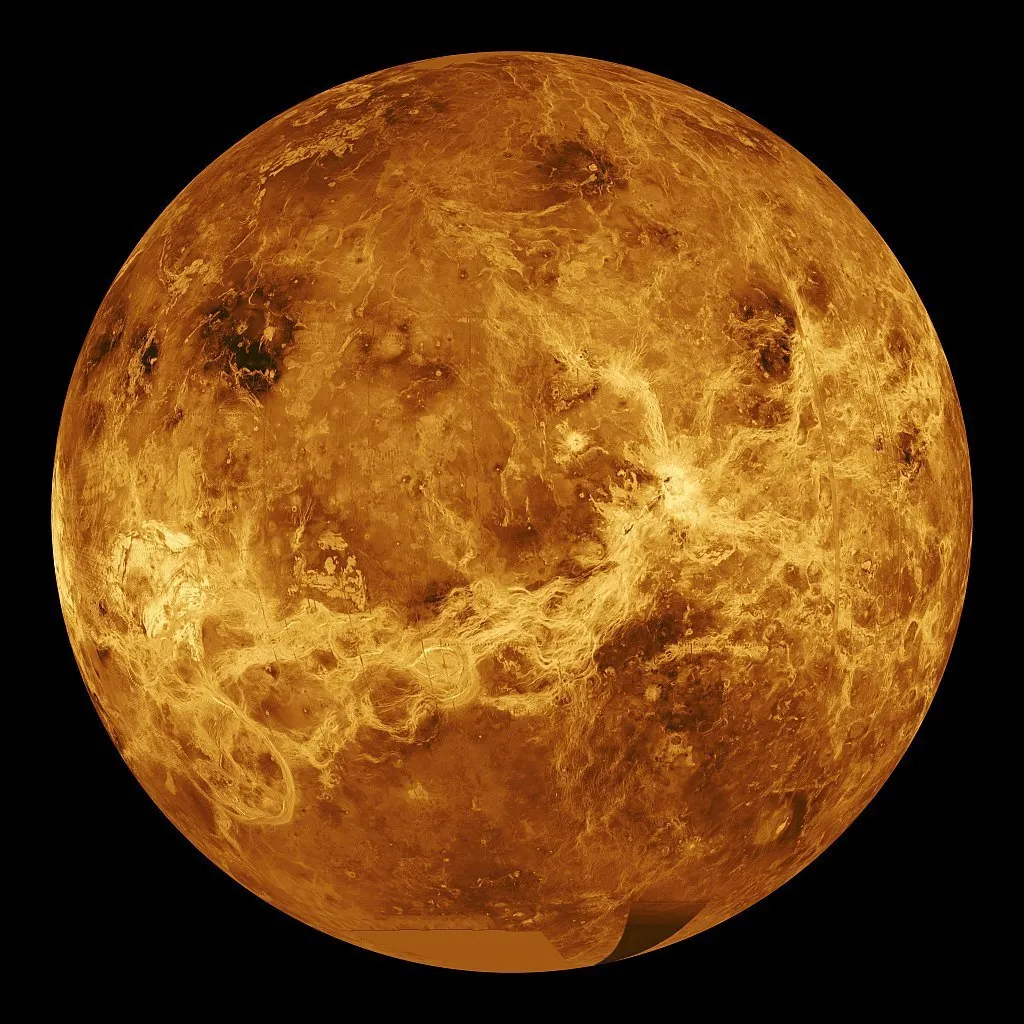
Planetary scientists are studying bizarre surface formations on Venus known as coronae to better understand the planet's interior. Using data from NASA's Magellan spacecraft, researchers have created new 3D models of these formations, revealing their diverse characteristics. The findings suggest that these structures may provide insights into Venus' geodynamic processes and their potential parallels on early Earth.
- ▪The study focuses on coronae, which are large circular formations on Venus' surface.
- ▪Researchers used data from the Magellan spacecraft to create 3D models of these formations.
- ▪The findings indicate that coronae result from various dynamic processes, not a single formation mechanism.
Opening excerpt (first ~120 words) tap to expand
Bizarre Venus Surface Formations Puzzle Planetary Scientists By Bruce Dorminey - May 15, 2026 09:34 PM UTC | Planetary Science Venus image made with data made available by NASA shows the planet from the Magellan spacecraft and Pioneer Venus Orbiter. Credit: NASA/JPL-Caltech Bizarre Venus surface formations (or coronae) are likely key to understanding our twin planet’s heretofore inscrutable interior. Using NASA Magellan spacecraft data from decades past, Anna Gulcher, an earth and planetary scientist at Germany’s University of Freiburg, have created innovative new 3D models of the largest coronae to better understand Venus’ puzzling geodynamics.
…
Excerpt limited to ~120 words for fair-use compliance. The full article is at Universe Today.
Discussion
0 commentsMore from Universe Today