A Brief-Ish History of SETI. Part VII: Brief Windows and Transcendence
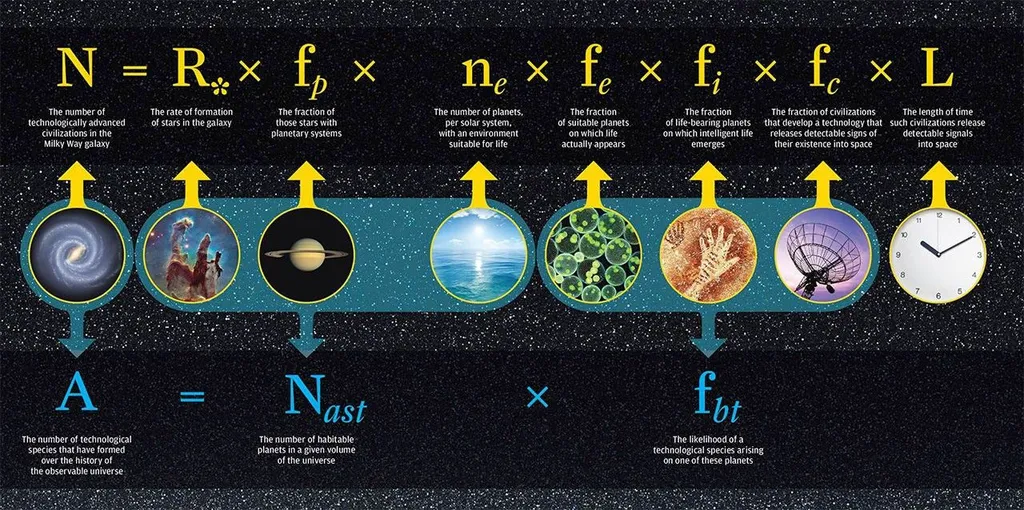
The article discusses the ongoing exploration of the Search for Extraterrestrial Intelligence (SETI) and examines various hypotheses regarding the absence of contact with advanced civilizations. It highlights the 'Brief Window Hypothesis,' which suggests that the lifespan of technologically advanced civilizations may be too short for meaningful communication. Additionally, it explores the idea that exponential growth may not be sustainable for intelligent civilizations, drawing parallels with human history.
- ▪The Drake Equation estimates the probability of finding advanced civilizations in the Universe.
- ▪The 'Brief Window Hypothesis' suggests that the lifespan of a civilization is finite, impacting their ability to communicate.
- ▪Some researchers argue that exponential growth is not sustainable for intelligent civilizations, which may explain the lack of contact.
Opening excerpt (first ~120 words) tap to expand
A Brief-ish History of SETI. Part VII: Brief Windows and Transcendence By Matthew Williams - May 24, 2026 11:27 PM UTC | Space Exploration The Drake Equation: a mathematical formula for estimating the probability of finding advanced civilizations in the Universe. Credit: University of Rochester Welcome back to our continuing series on the Brief-ish History of SETI. In our previous installments, we looked at the early history and the first experiments in the Search for Extraterrestrial Intelligence (SETI), followed by the first example of a modern SETI survey (Project Ozma) led by famed Cornell professor Frank Drake, the Drake Equation, and the enduring legacy of both.
…
Excerpt limited to ~120 words for fair-use compliance. The full article is at Universe Today.