Put it in pencil: NASA's Artemis III mission will launch no earlier than late 2027
NASA's Artemis III mission is now scheduled for no earlier than late 2027, with SpaceX and Blue Origin confirming their lunar landers could be ready for an Earth orbit test by then. The mission will no longer land on the Moon but instead conduct a rendezvous and docking test with one or both landers in Earth orbit. This change allows for safer, earlier testing of critical systems before attempting a lunar landing, and could help maintain a faster Artemis mission cadence. NASA is still finalizing the mission's orbit, spacecraft configuration, and testing plans, including potential use of commercial spacesuits.
Full article excerpt tap to expand
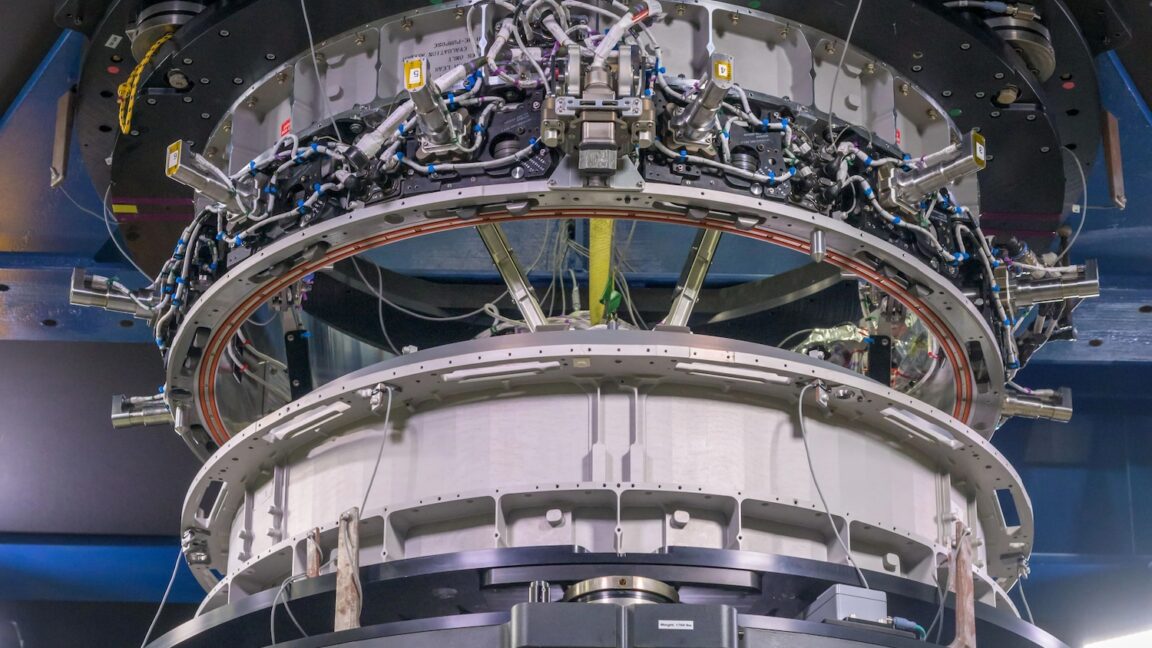
Meeting NASA’s needs Put it in pencil: NASA’s Artemis III mission will launch no earlier than late 2027 SpaceX and Blue Origin tell NASA their lunar landers will be ready for Artemis III in late 2027. Stephen Clark – Apr 27, 2026 8:14 pm | 43 This photo from 2023 shows a ground test of the docking mechanism for Starship, derived from the system used on SpaceX's Crew Dragon spacecraft. Credit: SpaceX This photo from 2023 shows a ground test of the docking mechanism for Starship, derived from the system used on SpaceX's Crew Dragon spacecraft. Credit: SpaceX Text settings Story text Size Small Standard Large Width * Standard Wide Links Standard Orange * Subscribers only Learn more Minimize to nav NASA Administrator Jared Isaacman told lawmakers on Monday that SpaceX and Blue Origin, the agency’s two lunar lander contractors, say they could have their spacecraft ready for the next Artemis mission in Earth orbit in late 2027, somewhat later than NASA’s previous schedule. This mission, Artemis III, will not fly to the Moon. Instead, NASA will launch an Orion capsule with a team of astronauts to rendezvous and potentially dock with one or both landers in Earth orbit. The details of the Artemis III flight plan remain under review, with key questions about the orbit’s altitude and the configuration of the Space Launch System rocket still unanswered. A mission to low-Earth orbit, just a few hundred miles in altitude, may not require NASA to use up an SLS upper stage that is already built and in storage, saving the unit for the following Artemis mission to attempt a landing on the Moon. A launch into a higher orbit would require the upper stage, but it would allow NASA to perform tests in an environment more similar to the Moon. NASA is buying a new commercial upper stage, the Centaur V from United Launch Alliance, to pair with the SLS rocket after flying the last of the rocket’s existing upper stages. Also in question is which of the landers—SpaceX’s Starship or Blue Origin’s Blue Moon—Artemis III will attempt to link to in space, or if NASA will try to incorporate both landers into the flight plan, assuming they are ready. Two months ago, Isaacman announced Artemis III would no longer land at the Moon’s south pole. The original Artemis III mission profile would have tried to accomplish too much. With that plan, the first time humans docked with and boarded a Starship or Blue Moon spacecraft would have been near the Moon, a quarter-million miles and several days away from Earth. Instead, Artemis III will be a mission akin to Apollo 9, which tested the Apollo lunar lander in Earth orbit four months before Apollo 11’s historic landing at the Sea of Tranquility with Neil Armstrong and Buzz Aldrin. If something goes wrong in Earth orbit, the Artemis III astronauts will be minutes or hours from home, not days. NASA Administrator Jared Isaacman testifies during a House budget hearing at the Rayburn House Office Building on April 27, 2026, in Washington, DC. Credit: Heather Diehl/Getty Images NASA Administrator Jared Isaacman testifies during a House budget hearing at the Rayburn House Office Building on April 27, 2026, in Washington, DC. Credit: Heather Diehl/Getty Images 18 months away? All of the ambition wrapped up in NASA’s original plan for Artemis III also meant a long multiyear gap before the next launch of the SLS rocket and Orion spacecraft after the nearly flawless flight of the Artemis II mission earlier this month. The agency wants to fly…
This excerpt is published under fair use for community discussion. Read the full article at Ars Technica - All content.
Discussion
0 commentsMore from Ars Technica - All content