China kills Meta’s acquisition of Manus as US-China AI rivalry deepens
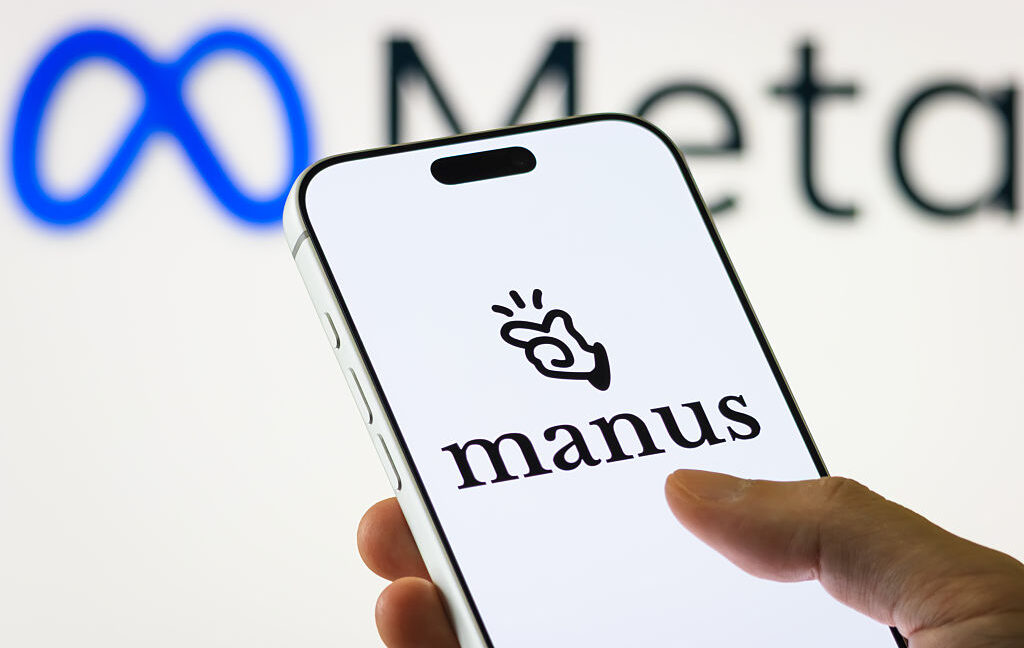
The unwinding of Meta’s deal shows how tech founders struggle to cut China ties.
Full article excerpt tap to expand
Red light China kills Meta’s acquisition of Manus as US-China AI rivalry deepens The unwinding of Meta’s deal shows how tech founders struggle to cut China ties. Jeremy Hsu – Apr 27, 2026 2:12 pm | 15 Credit: Cheng Xin/Getty Images Credit: Cheng Xin/Getty Images Text settings Story text Size Small Standard Large Width * Standard Wide Links Standard Orange * Subscribers only Learn more Minimize to nav China has blocked US tech giant Meta’s acquisition of the AI company Manus that was founded by Chinese tech entrepreneurs. That development indicates how difficult it has become for US and Chinese tech companies to strike and sustain such deals as government authorities on both sides take an increasingly hard line amid the deepening US-China AI rivalry. The Chinese government formally asked Meta to unwind the acquisition on April 27 after deciding to ban foreign investment in Manus based on national security concerns. It had already spent months officially scrutinizing Meta’s $2 billion acquisition of Manus that took place in December 2025—Chinese regulators announced they were reviewing the deal in January 2026 and instructed the two Manus cofounders to not leave China while the investigation was ongoing, according to The Wall Street Journal. Manus burst onto the scene in March 2025 with its “general AI agent,” designed to help users with tasks such as searching real estate sites for a new home or booking airline tickets and hotels for an international trip. The Manus AI agent is an “agentic wrapper” or “agentic harness” that enables an underlying AI model—in this case, Anthropic’s Claude 3.7 Sonnet—to take actions to carry out user requests. But Manus actually incorporates multiple AI agents to perform and verify tasks, including a planner agent that assigns tasks and an executor agent that can browse and interact with websites, create spreadsheets, use various software tools, and even code new applications. That quickly drew the attention of Silicon Valley and Meta in particular, given CEO Mark Zuckerberg’s big business push in 2025 to develop “personal [AI] superintelligence for everyone.” When Meta acquired Manus, the US tech company began incorporating the Manus AI agent into its services, such as Meta’s Ads Manager, which is the main platform for advertisers to create and track ad campaigns on Meta’s social media platforms like Facebook, Instagram, Messenger, and WhatsApp. The ties that bind The Manus founders, Xiao Hong and Ji Yichao, have already relocated most of their team from China to Meta’s Singapore office and have taken pains to cut any lingering Chinese ties in the lead-up to the Meta acquisition late last year—even turning down Chinese authorities’ requests for meetings or investment, according to The Wire China. They paved the way for the move to Singapore by registering the firm Butterfly Effect Pte and setting up Butterfly Effect Holding as a parent company based in the Cayman Islands. Now, the Chinese government’s decision to quash the deal creates significant uncertainty for both Manus and Meta’s future AI ambitions. For example, Manus may not be able to continue deploying its AI agent service using Anthropic’s Claude models, given that Anthropic has restricted AI sales to entities in China. “If Manus had remained a Chinese company, its core product would have disappeared,” said Chris McGuire, a former national security official with the Biden administration who designed US restrictions on tech exports and…
This excerpt is published under fair use for community discussion. Read the full article at Ars Technica - All content.
Discussion
0 commentsMore from Ars Technica - All content