Artemis II broke Fred Haise's distance record, but he is happy to pass it on
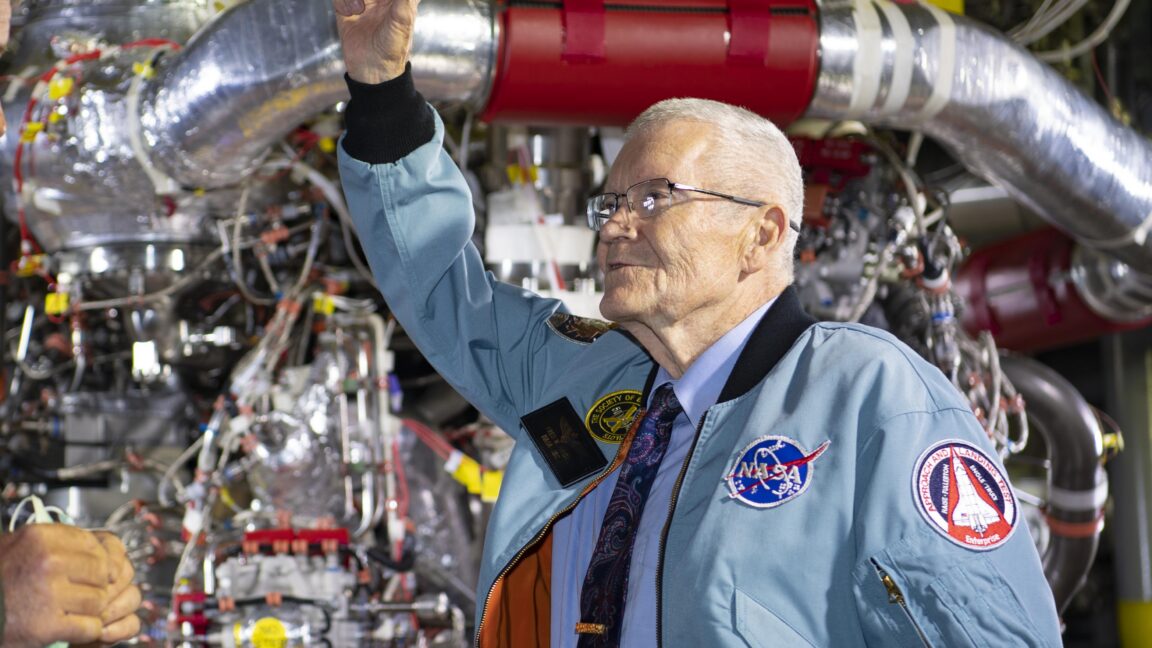
The Artemis II mission broke the record for the farthest humans have traveled from Earth, surpassing the distance set by Apollo 13 in 1970. The crew reached 252,756 miles from Earth, slightly farther than Apollo 13’s 248,655 miles, due in part to the Moon’s position in its elliptical orbit. Fred Haise, the sole surviving Apollo 13 astronaut, expressed indifference toward the record, calling it a consolation for their failed lunar landing. He hopes future missions will return to the Moon more frequently with sustained funding and support.
- ▪Artemis II reached a maximum distance of 252,756 miles (406,771 km) from Earth, setting a new human spaceflight distance record.
- ▪The previous record was set by Apollo 13 in April 1970 at 248,655 miles (400,171 km) from Earth.
- ▪Fred Haise, the only living Apollo 13 crew member, said the record was not meaningful to him, as it resulted from the Moon’s position, not mission design.
- ▪Artemis II followed a free-return trajectory, using the Moon’s gravity to slingshot back to Earth without entering lunar orbit.
- ▪NASA has canceled plans for the Gateway space station and now aims to establish a base on the lunar surface for sustained exploration.
Full article excerpt tap to expand
Passing the torch Artemis II broke Fred Haise’s distance record, but he is happy to pass it on “It wasn’t a big deal. It just coincided with the fact that Moon was farther away from the Earth.” Stephen Clark – Apr 25, 2026 7:40 am | 36 Former NASA astronaut Fred Haise stands in front of an RS-25 engine for the Space Launch System rocket at Stennis Space Center, Mississippi, on December 7, 2021. Credit: NASA/Danny Nowlin Former NASA astronaut Fred Haise stands in front of an RS-25 engine for the Space Launch System rocket at Stennis Space Center, Mississippi, on December 7, 2021. Credit: NASA/Danny Nowlin Text settings Story text Size Small Standard Large Width * Standard Wide Links Standard Orange * Subscribers only Learn more Minimize to nav With the circumlunar flight of Artemis II, and the prospect of landing astronauts on the lunar surface within a few years, humanity is preempting an era where the imprint of visiting the Moon would be erased from living memory. There are five men still alive who flew to the Moon on NASA’s Apollo missions. All are now in their 90s. Between 1968 and 1972, 24 astronauts visited the Moon, and 12 of them walked on its surface. We’ll have to wait a little longer to add to the roster of Moonwalkers, but there are four new names to etch on the list of lunar explorers. The Artemis II astronauts, all in their 40s or 50s, flew a little more than 4,000 miles from the Moon, higher above the surface than the Apollo lunar missions. The four-person crew on Artemis II set a new record for the farthest humans have ever traveled from Earth: 252,756 miles (406,771 kilometers). Artemis II broke the record set on the Apollo 13 mission in April 1970, when astronauts Jim Lovell, Jack Swigert, and Fred Haise soared to a maximum distance from Earth of 248,655 miles (400,171 kilometers). Ars recently visited with Haise to discuss his perspective on the record and the Artemis II mission, and we include the interview later in this story. The Apollo 13 record stood for almost exactly 56 years. NASA officials, astronauts, and space enthusiasts alike hope the Artemis II record won’t last quite as long. Parsing the numbers When might Artemis II’s record actually be broken? Missions heading to the lunar surface won’t have to venture so far beyond the far side of the Moon. Artemis II followed a free-return trajectory, using the Moon’s gravity to slingshot the Orion capsule back toward the Earth for reentry. But there are other factors that make calculating the distance of future Artemis missions a little complicated. These considerations center on orbital dynamics. The Moon’s 27-day orbit around the Earth is not a perfect circle. On average, the distance between the centers of the Earth and the Moon ranges between about 225,800 and 252,000 miles (363,400 to 405,500 km). The Sun’s gravitational influence throws the Moon’s orbit into a constant state of change. Sometimes the Moon’s perigee, or nearest point to Earth, is closer than average. Similarly, the Moon’s apogee stretches farther from Earth on some orbits. The Moon’s apogee can reach as far as 252,727 miles (406,725 km). The Moon’s orbit only touches this distance about once every 5,000 years, but it routinely gets close (within 100 km, or 62 miles, three times between now and 2040). A NASA website explains all of this in extensive detail. Suffice it to say, it is impossible to predict when humans might break the Artemis II distance record. NASA planned to place the Gateway…
This excerpt is published under fair use for community discussion. Read the full article at Ars Technica - All content.
Discussion
0 commentsMore from Ars Technica - All content