US Weather Maps Show States Facing Snow, Thunderstorms
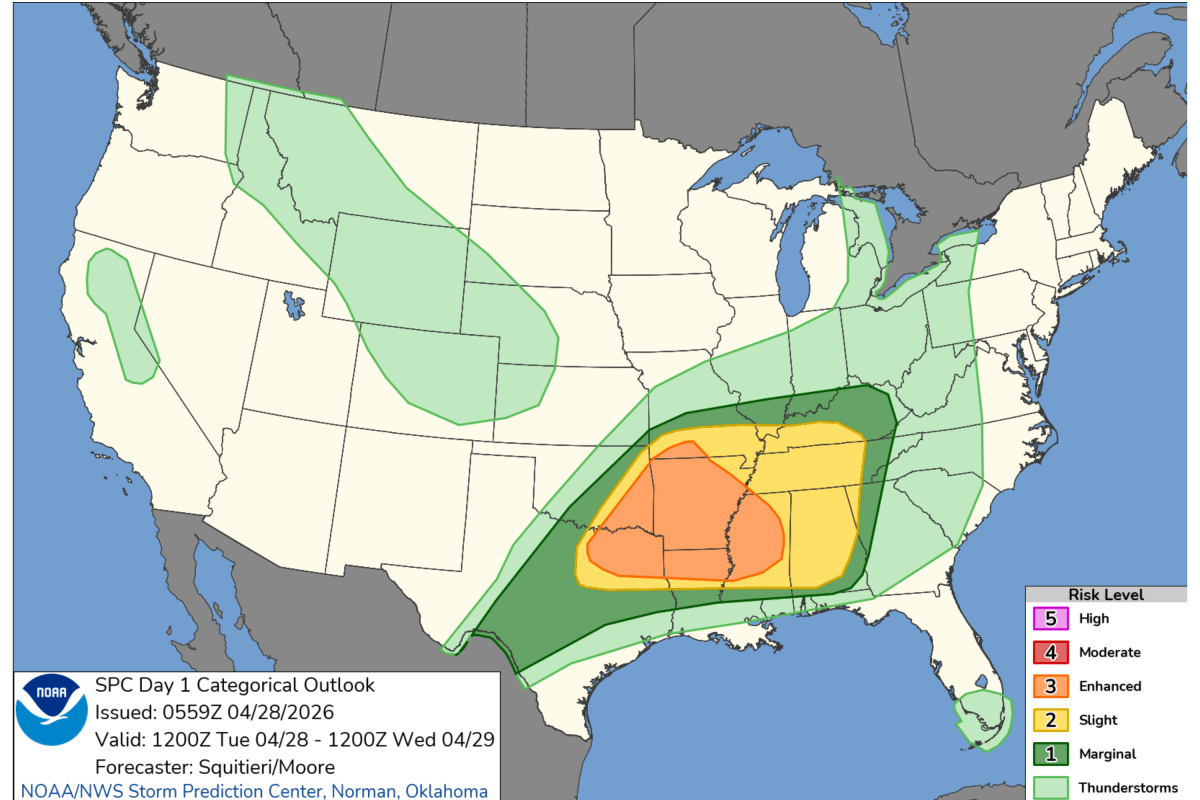
Parts of the southern and midwestern U.S. face a threat of severe thunderstorms and possible tornadoes, while mountainous areas of Wyoming deal with heavy snow and hazardous winter conditions through Tuesday. The National Weather Service warns of damaging winds, large hail, and fast-moving tornadoes in states from Texas to Tennessee, and of dangerous travel due to snow and low visibility in Wyoming. Residents are urged to monitor alerts and take precautions, including seeking shelter and preparing for rapidly changing conditions. Both weather systems pose risks to infrastructure, travel, and outdoor activities.
Full article excerpt tap to expand
By Amanda GreenwoodAssociate News EditorShareNewsweek is a Trust Project memberSee more of our trusted coverage when you search.Prefer Newsweek on Googleto see more of our trusted coverage when you search.Several parts of the United States have been advised to prepare for either severe thunderstorms or heavy snowfall through Tuesday. Both types of extreme weather could disrupt travel and cause damage to buildings and infrastructure, according to the National Weather Service (NWS) and the NWS Storm Prediction Center (SPC),Below are maps showing the two weather systems expected to impact some western, southern, and midwestern parts of the nation. Severe Thunderstorms and Tornadoes Threaten Parts of the South and Midwest...A broad swath of the south and lower parts of the Midwest face an increased risk of severe thunderstorms and possible tornadoes as a powerful storm system moves east, according to the SPC and multiple local weather offices. The SPC’s “Day 1 Convective Outlook,” which covers the next 24 hours, places parts of north Texas under an “enhanced risk of severe thunderstorms,” while surrounding areas, including east Texas, Arkansas, southeast Missouri, western Kentucky, Tennessee, and northern Mississippi, are under a Slight Risk for severe storms.Forecasters warn that through Tuesday afternoon and evening, “multiple rounds of strong to severe thunderstorms” in these areas could produce damaging wind gusts, large hail, and tornadoes, some of which may be strong and fast‑moving.Regions of Highest ConcernThe greatest concentration of severe weather potential is expected from the Lower Mississippi Valley into the Tennessee and Ohio Valleys, where conditions are favorable for storm development. According to the SPC, much warmer, more humid air near the ground compared with cooler air aloft is creating strong atmospheric instability. This, combined with increasing and erratic winds, could allow storms to quickly intensify, raising the risk of damaging winds and rotating thunderstorms capable of producing tornadoes.Surrounding areas across the central Plains, Ozarks, and mid‑South face a lower risk of thunderstorms, meaning that although severe storms are still possible, the storm activity is expected to be more scattered and less widespread than in the higher‑risk zones.Active Warnings Across the Mid‑SouthSevere weather has already developed across parts of the mid‑South, prompting multiple “severe thunderstorm warnings” from the NWS offices in Memphis and Nashville.The warnings covered portions of eastern Arkansas, along with west and middle parts of Tennessee, during the early hours of Tuesday morning.Storms were capable of producing wind gusts up to 60 mph and hail the size of a quarter or even up to an inch in diameter.The NWS said damage to trees, roofs, siding, and vehicles was possible, especially given the storms’ rapid movement eastward, at a rate of 50 mph.Tornado Risk RemainsAlthough the initial alerts focused on severe thunderstorms, tornado watches remained in effect across large portions of eastern Arkansas and Tennessee into Tuesday morning, with forecasters cautioning that tornadoes could still develop quickly.What Residents Should KnowOfficials urge residents in affected areas to closely monitor weather forecasts and move to an interior room on the lowest floor of a sturdy building if a tornado warning is issued. With additional storm development expected throughout the day, forecasters emphasize that conditions may…
This excerpt is published under fair use for community discussion. Read the full article at Newsweek.
Discussion
0 commentsMore from Newsweek