Uranus has weird rings. Astronomers now know the source of two of them
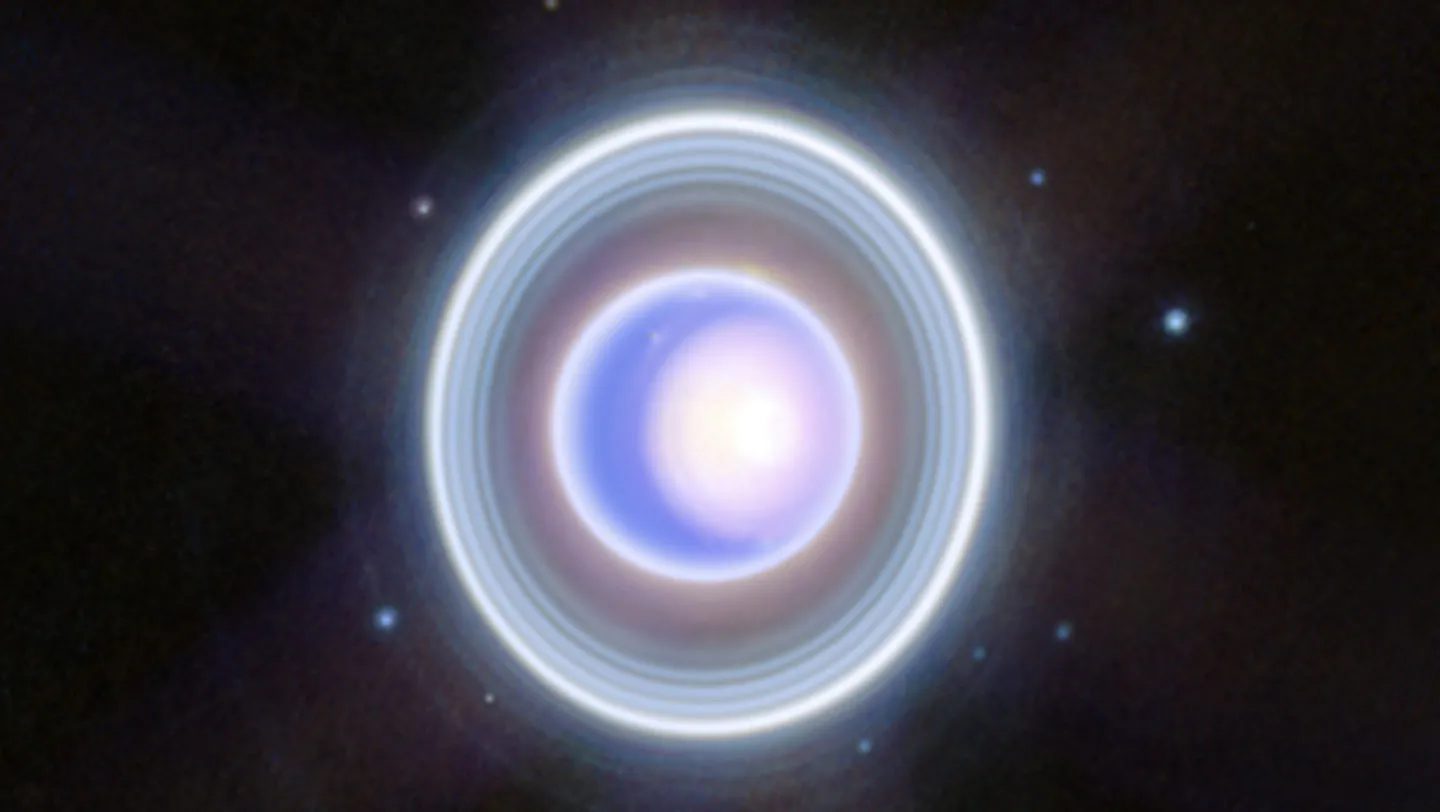
The Nu ring seems to be fed by unknown rocky bodies, whereas the Mu ring appears rich in water ice and linked to the moon Mab.
Full article excerpt tap to expand
News Planetary Science Uranus has weird rings. Astronomers now know the source of two of them A new study suggests one ring comes from the moon Mab and the other from unseen rocky bodies In 2023, the James Webb Space Telescope caught sight of Uranus and its gossamer ring system, glowing in infrared. Several of its moons can also be seen pirouetting around the ice giant in this false color image. NASA, ESA, CSA, STScI By Robin George Andrews 39 seconds ago Share this:Share Share via email (Opens in new window) Email Share on Facebook (Opens in new window) Facebook Share on Reddit (Opens in new window) Reddit Share on X (Opens in new window) X Print (Opens in new window) Print The rings around Uranus have mystified astronomers for almost half a century. Now, thanks to a combination of ground- and space-based telescopic observations, scientists think they’ve worked out where two of these rings came from. A blue-tinged ring, named Mu, seems to be made of icy shards knocked off a nearby moon by micrometeorite impacts, researchers report in the April Journal of Geophysical Research: Planets. Conversely, Nu, a reddish ring, is composed of rocky particles probably sourced in a similar manner from an unseen rocky moon or moons. #newsletter-helper svg { width: auto; fill: #f1563e; } #newsletter-helper { display: flex; border-top: 1px solid gray; padding-top: 10px; padding-left: 20px; margin-bottom: 10px; max-width: 900px; margin: auto } .zephr-form-container { border-bottom: 1px solid gray; margin: 0px !important; } Sign up for our newsletter We summarize the week's scientific breakthroughs every Thursday. .zephr-form-progress-bar.svelte-d78fa2{width:100%;border:0;border-radius:20px;margin-top:10px}.zephr-form-progress-bar.svelte-d78fa2::-webkit-progress-bar{background-color:var(--zephr-color-background-tinted);border:0;border-radius:20px}.zephr-form-progress-bar.svelte-d78fa2::-webkit-progress-value{background-color:var(--zephr-color-text-tinted);border:0;border-radius:20px}.zephr-progress-bar-step.svelte-d78fa2{margin:auto;color:var(--zephr-color-text-tinted);font-size:var(--zf-subtext-fontSize);font-family:var(--zf-root-fontFamily);cursor:pointer}.zephr-progress-bar-step.svelte-d78fa2:first-child{margin-left:0}.zephr-progress-bar-step.svelte-d78fa2:last-child{margin-right:0}.zephr-progress-bar-step.disabled.svelte-d78fa2{cursor:default} .apple-pay-button{display:inline-block;-webkit-appearance:-apple-pay-button;-apple-pay-button-type:pay;width:440px;max-width:100%;height:45px;margin-top:20px}.apple-pay-button-black{-apple-pay-button-style:black}#google-pay-button.svelte-1acsmhs{width:440px;max-width:100%;height:45px;margin-top:20px} .zephr-form-error-message-min-height.svelte-719cfr{min-height:1.1em}.zephr-form-error-message.svelte-719cfr{color:var(--zephr-color-warning-main);font-size:var(--zf-subtext-fontSize);margin-top:0.5em;position:relative;margin-left:1.2em;margin-right:1.2em} #braintree-dropin-container.svelte-z7jd27{margin-top:1em;margin-bottom:1em} #stripe-element.svelte-1lhuc6b{margin-top:2em;margin-bottom:1em;border:calc(var(--zephr-input-borderWidth) * 1px) solid var(--zephr-input-borderColor);border-radius:calc(var(--zephr-input-borderRadius) * 1px);padding:1em}#stripe-element.svelte-1lhuc6b iframe:focus{outline:none !important} #stripe-mobile-pay-button.svelte-1t95nqv{width:440px;max-width:100%;height:45px;margin-top:20px}…
This excerpt is published under fair use for community discussion. Read the full article at Science News.
Discussion
0 commentsMore from Science News