The universe may end trillions of years sooner than we thought
Recent research suggests the universe may end in a 'Big Crunch' in about 33 billion years, much sooner than the trillions of years previously expected. This prediction is based on new data indicating that dark energy's influence on cosmic expansion changes over time. If confirmed, the universe's expansion could reverse, collapsing all matter and space-time into a dense state.
- ▪The universe may end in a 'Big Crunch' 33.3 billion years from now, according to a new study.
- ▪Recent data from the Dark Energy Survey and DESI suggest dark energy's equation of state changes over time.
- ▪The axion dark energy model, combining an axion field and a cosmological constant, may explain observations and predict a future collapse.
- ▪Running simulations with this model indicates the universe could reverse expansion and collapse in on itself.
- ▪This timeline contrasts with the traditional view of eternal cosmic expansion lasting trillions of years.
Opening excerpt (first ~120 words) tap to expand
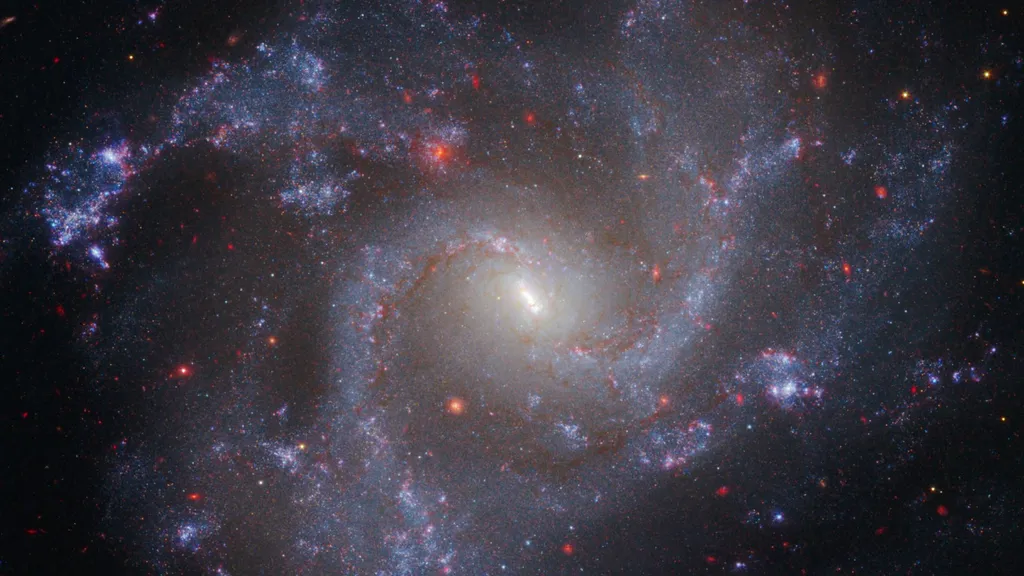
Space Astronomy Cosmology The universe may end trillions of years sooner than we thought Recent surveys hint that the rate of cosmic expansion changes dramatically over time; if that's true, then the universe could end much sooner than we thought, new research suggests. By Paul Sutter published 28 April 2026 in News When you purchase through links on our site, we may earn an affiliate commission. Here’s how it works. Astronomers use twinkling stars in galaxies like this one (NGC 5468) to confirm the universe’s expansion rate. But what if cosmic expansion were to slow down and reverse? New research looks at the implications on the lifespan of the universe. (Image credit: NASA, ESA, CSA, STScI, A.
…
Excerpt limited to ~120 words for fair-use compliance. The full article is at Live Science.
Discussion
0 commentsMore from Live Science