The Prehistory of A.I. Slop
The article discusses the evolution of automated writing, tracing its roots back to the Cold War era with early programs like the Auto-Beatnik. It highlights the increasing prevalence of machine-generated content, which has led to a phenomenon dubbed 'A.I. slop.' Critics warn that this trend could result in a 'textpocalypse,' where human-written content becomes a rarity.
- ▪In 1962, a programmer at Librascope created the Auto-Beatnik, a machine capable of generating poetry.
- ▪By the fall of 2024, machines were reportedly writing around half of all English-language articles published online.
- ▪The term 'A.I. slop' has emerged to describe the overwhelming amount of low-quality, machine-generated text flooding the internet.
Opening excerpt (first ~120 words) tap to expand
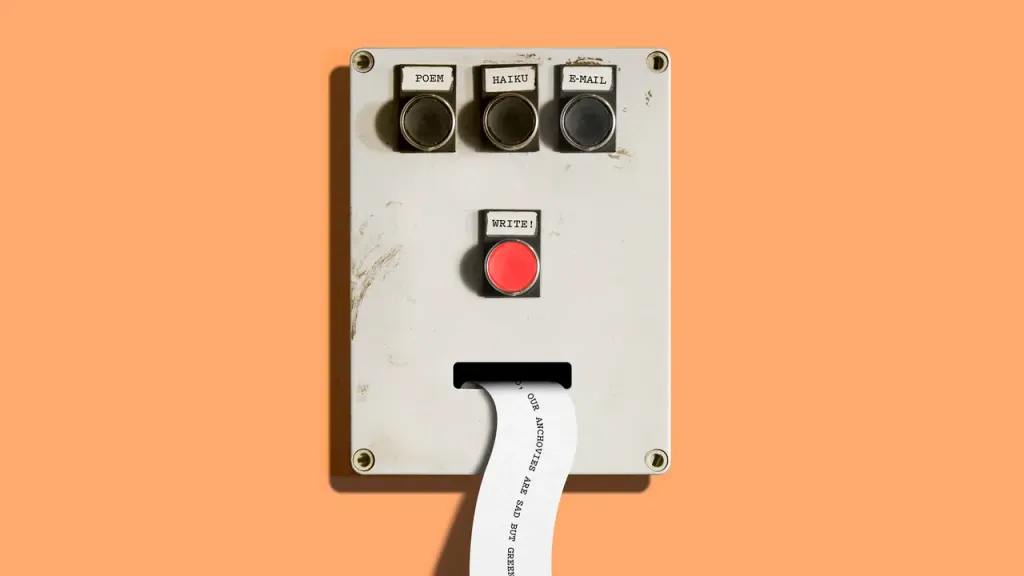
A Critic at LargeThe Prehistory of A.I. SlopBefore ChatGPT, there was the Plot Robot, Auto-Beatnik, and a century’s worth of schemes for automating authorship.By Jill LeporeMay 18, 2026During the Cold War, a period when computation and linguistics converged, having a machine that could read was useful when you were spying on your enemies. That it could learn to write was a bonus.Photo illustration by Jack Smyth; Source photograph from GettySave this storySave this storySave this storySave this storyIn 1962, a programmer at Librascope, a California-based defense contractor, announced that “a computer can be programmed to write meaningful and relevant sentences in proper English.” At Librascope’s Laboratory for Automata Research, in Glendale, he’d started out by feeding into his…
Excerpt limited to ~120 words for fair-use compliance. The full article is at The New Yorker.
Discussion
0 commentsMore from The New Yorker