‘The folk scene is very middle class. The divide is huge’: Jim Ghedi, the Sheffield singer bringing his doomy music to the movies

Jim Ghedi, a Sheffield-based folk musician known for his brooding, apocalyptic sound, has gone from relative obscurity to scoring the upcoming A24 film The Death of Robin Hood starring Hugh Jackman, despite never having composed for film before. His music, rooted in working-class experience and influenced by hip-hop and punk, challenges the traditionally middle-class folk scene. Though plagued by impostor syndrome, Ghedi embraced the opportunity as a validation of his artistic path. His latest single, The Hungry Child, reflects on systemic inequality and government failure through a dark, experimental folk lens.
Full article excerpt tap to expand
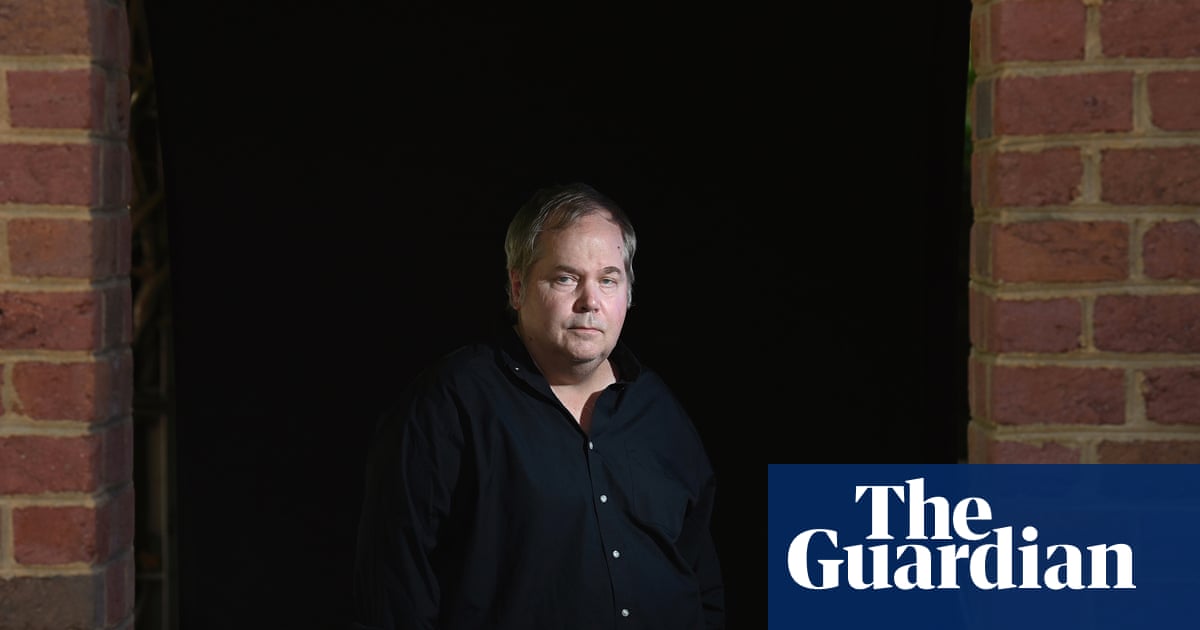
‘Government failures have allowed starving people to continue to starve’ … Jim Ghedi. Photograph: Amelia BakerView image in fullscreen‘Government failures have allowed starving people to continue to starve’ … Jim Ghedi. Photograph: Amelia BakerFolk musicInterview‘The folk scene is very middle class. The divide is huge’: Jim Ghedi, the Sheffield singer bringing his doomy music to the moviesDaniel Dylan WrayPlucked from relative obscurity to score Hugh Jackman film The Death of Robin Hood, the skilled singer-songwriter explains how he conquered his impostor syndromeTue 28 Apr 2026 05.38 EDTLast modified on Tue 28 Apr 2026 06.41 EDTSharePrefer the Guardian on GoogleLast year, Jim Ghedi was having a chicken dinner at his mother’s house in Sheffield when he checked his phone. “This director started following me on Instagram,” he recalls. “And there’s pictures of him with Nicolas Cage. As a joke, I said to my mam: ‘I might message him and say, let me do your next film score.’ As I said it, he messaged me, saying: ‘I want you to do my next film score.’”The director was Michael Sarnoski and the film is the forthcoming A24 production The Death of Robin Hood, starring Hugh Jackman and Jodie Comer. Sarnoski had heard Ghedi’s excellent 2025 album, Wasteland, a stirring and brooding album of apocalyptic folk that was a reflection of societal rot and collapse in England. Released on the small Calder Valley label Basin Rock, the album was critically acclaimed – and his most successful and ambitious to date – but it had not turned Ghedi into a household name. He thought that the film opportunity “would all blow away and they’d find out who I am”, he says. “Some top producer would put up the red flag.”Despite having never scored a film before, he was given the gig. He bonded instantly with Sarnoski through video calls and a shared love of Steeleye Span, and ended up writing the songs and score. He describes the finished material as “quite doomy, earthy and dark” – but also “quite light and orchestrated”.Ghedi was invited out to LA to to work on the project there, but instead chose to stay rooted in Sheffield. Even so, he had some wobbles. “There were moments when impostor syndrome was a real thing,” he tells me in an Irish pub in the city, over Guinness Zero and Scampi Fries. “It’s very rare for someone like me, and where I’m from, to get those kinds of opportunities. You don’t usually get to see that world. But I also had to think: ‘I’m being asked for a reason.’ I held tight to that.”View image in fullscreenHugh Jackman in The Death of Robin Hood, scored by Jim Ghedi. Photograph: Everett Collection Inc/AlamyGhedi, 35, was given a guitar when he was eight and quickly became a skilled player, but his teenage years were lit up by hip-hop and punk. The lyrical output of the first proved formative. “Hearing people talk about being raised by a single mum was like, whoa,” he recalls. “Here’s someone artistically talking about something that I’m also experiencing in my life.”Then came the revelatory discovery of Bert Jansch. “It was the first time I’d heard someone who played an acoustic guitar and it was not pretty,” he says. “It was really heavy and aggressive. So then I ripped him off for 10 years.” However, that through-line from hip-hop to folk made total sense to Ghedi. “Folk music, traditionally, was music for the working people, from the working people. Hip-hop and grime are the same.”Ghedi’s early albums were instrumental, showcasing his deft,…
This excerpt is published under fair use for community discussion. Read the full article at The Guardian — World.
Discussion
0 commentsMore from The Guardian — World