Objective metrics that change the most as we age
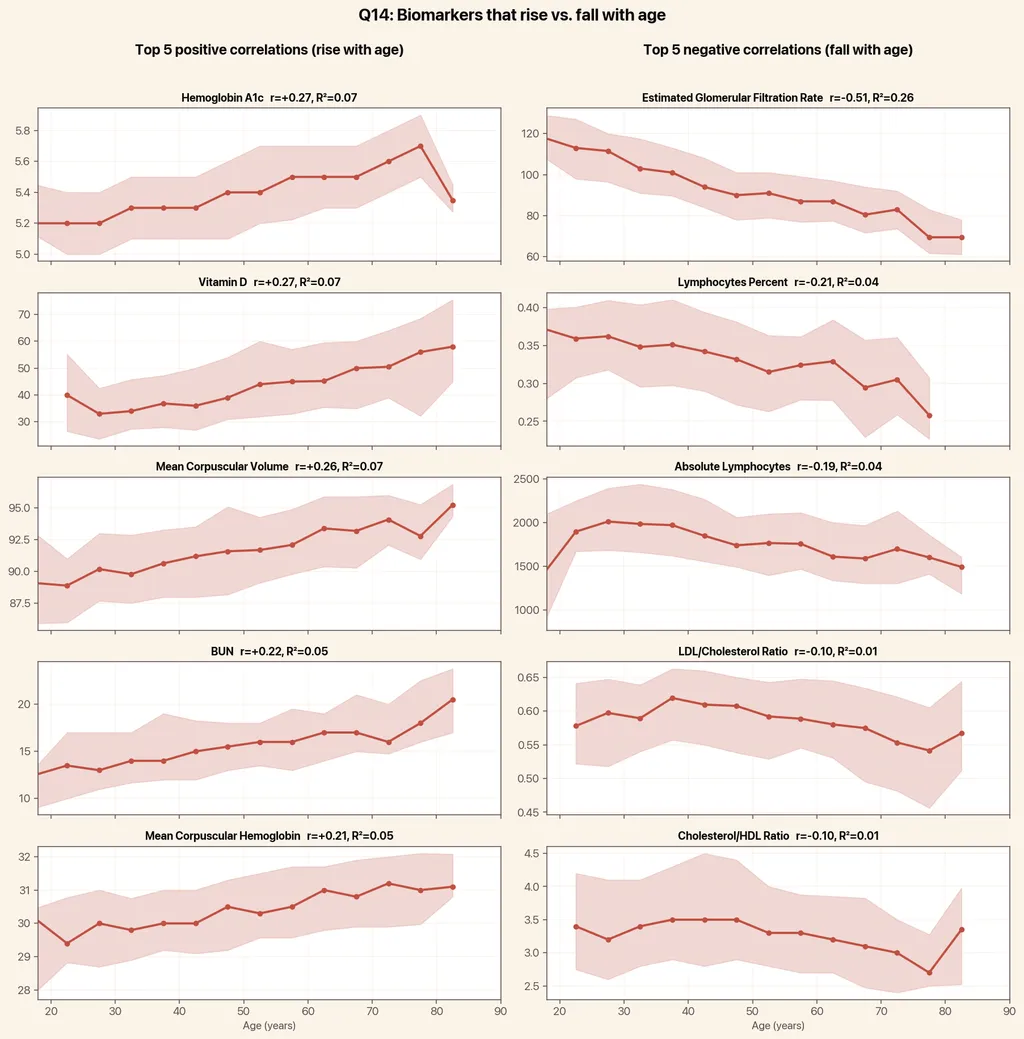
As people age, various objective metrics indicate gradual changes in bodily functions. Key biomarkers such as kidney function and blood sugar levels show measurable declines over time. Understanding these changes can help identify ways to slow or reverse aging effects.
- ▪eGFR, a measure of kidney function, declines approximately 6 to 7 points per decade after age 20.
- ▪HbA1c, which measures average blood sugar, increases about 0.1 percent per decade, indicating rising glucose intolerance.
- ▪Mean corpuscular volume (MCV) and mean corpuscular hemoglobin (MCH) also increase with age, reflecting changes in red blood cell size.
Opening excerpt (first ~120 words) tap to expand
Objective metrics that change the most as we age Brandon Ballinger May 23, 2026 Yeats wrote of an aged man as “a tattered coat upon a stick.” But for most of us, aging comes as small diminishments: the morning that takes a little longer to shake off, the flight of stairs you notice, the cold that lingers a week instead of three days, the run that used to feel easy. We register these shifts as fatigue or a busy season before we register them as time. The body is keeping score long before we are. Each of these feelings has a number behind it. The morning that takes longer to shake off lines up with kidney and liver filtration slowing down. Two glasses of wine hit differently at forty than at twenty, and as eGFR drops a few points per decade, the cleanup takes longer.
…
Excerpt limited to ~120 words for fair-use compliance. The full article is at Empirical Health.
Discussion
0 commentsMore from Empirical Health