New quantum sensor could count individual photons and hunt dark matter
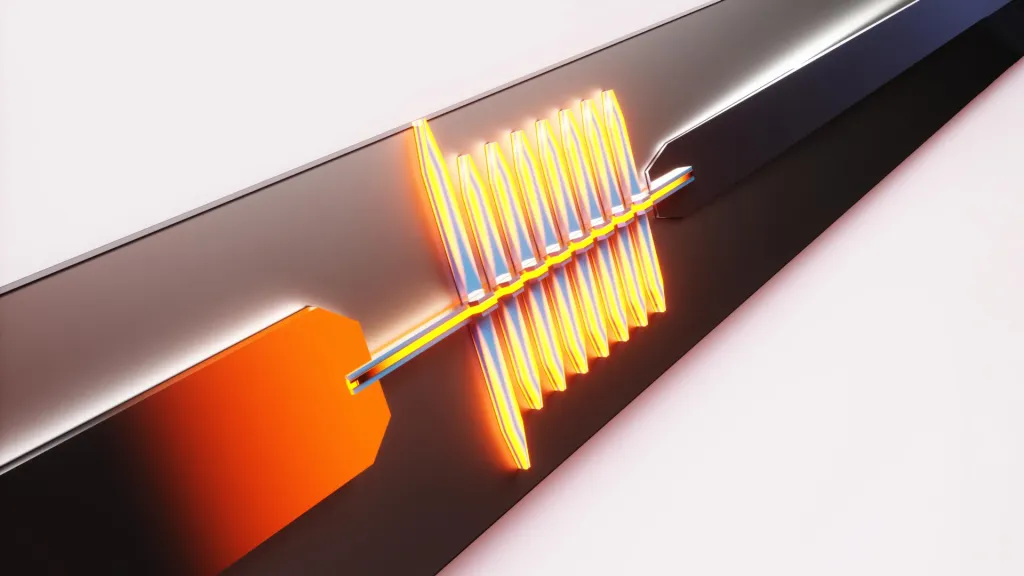
Researchers in Finland have developed a new quantum sensor that can detect energy levels below one zeptojoule, a significant advancement in measurement technology. This ultra-sensitive sensor could enhance quantum computing capabilities and aid in the search for dark matter by enabling the counting of individual photons. The breakthrough was achieved using a combination of superconducting and regular metals, allowing for unprecedented precision in energy measurement.
- ▪The sensor can detect energy levels smaller than one zeptojoule, which is less than a trillionth of a billionth of a joule.
- ▪This technology could improve quantum computing and assist in detecting dark matter particles.
- ▪The research was led by Aalto University in collaboration with IQM and VTT, and published in Nature Electronics.
Opening excerpt (first ~120 words) tap to expand
Science News from research organizations New quantum sensor could count individual photons and hunt dark matter Scientists just detected one of the tiniest energy signals ever measured — a breakthrough that could transform quantum computing and dark matter searches. Date: May 20, 2026 Source: Aalto University Summary: Researchers have built an ultra-sensitive sensor capable of detecting unimaginably small amounts of energy — below one zeptojoule. The breakthrough relies on fragile superconducting materials that react to even the slightest temperature change. This level of precision could improve quantum computers, enable photon counting, and even help scientists detect elusive dark matter particles from space.
…
Excerpt limited to ~120 words for fair-use compliance. The full article is at ScienceDaily.
Discussion
0 commentsMore from ScienceDaily