Lost for 150,000 years: Rainforest discovery upends human history
A recent discovery in Côte d'Ivoire has revealed that ancient humans lived in dense rainforests around 150,000 years ago, challenging previous beliefs about early human habitats. This finding significantly predates the previously known evidence of rainforest habitation in Africa, which was thought to be only 18,000 years old. The research suggests that early Homo sapiens were more adaptable and capable of thriving in diverse ecosystems than previously understood.
- ▪Researchers uncovered evidence of human habitation in West African rainforests dating back 150,000 years.
- ▪This discovery pushes back the oldest known evidence of rainforest habitation by more than double previous estimates.
- ▪The findings indicate that early humans were ecological generalists, thriving in various environments.
Opening excerpt (first ~120 words) tap to expand
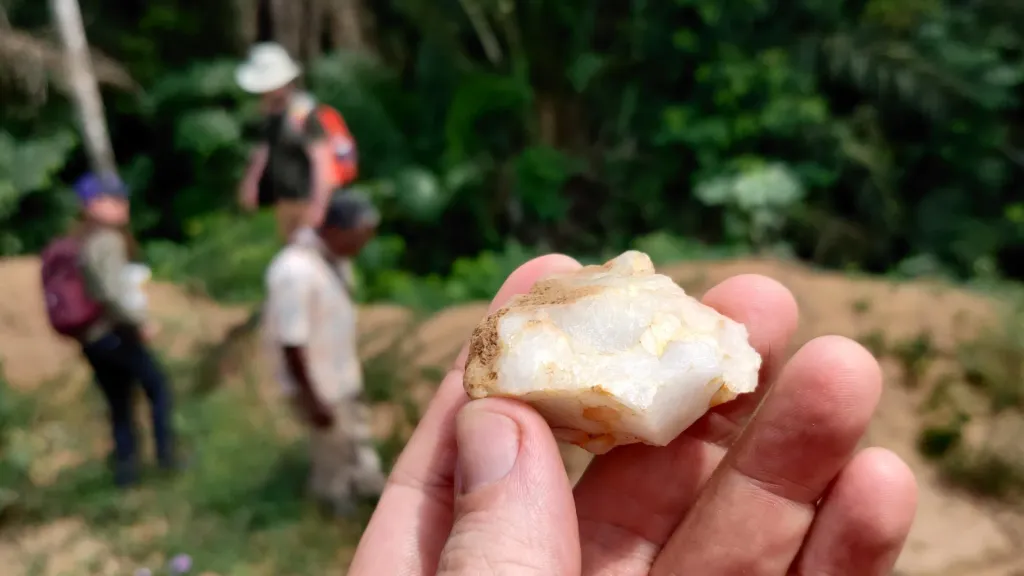
Science News from research organizations Lost for 150,000 years: Rainforest discovery upends human history Date: May 20, 2026 Source: Max Planck Institute of Geoanthropology Summary: For decades, scientists believed ancient humans avoided dense rainforests, treating them as nearly impossible environments for early survival. But a groundbreaking discovery in West Africa is rewriting that story. Researchers uncovered evidence that humans were living deep within rainforest environments in present-day Côte d'Ivoire around 150,000 years ago — far earlier than anyone thought possible. Share: Facebook Twitter Pinterest LinkedIN Email FULL STORY Stone tools like this one, excavated at the Anyama site, reveal that humans were present at the rainforested site roughly 150,000 years ago.
…
Excerpt limited to ~120 words for fair-use compliance. The full article is at ScienceDaily.
Discussion
0 commentsMore from ScienceDaily