How do Californians tolerate extreme inequality?
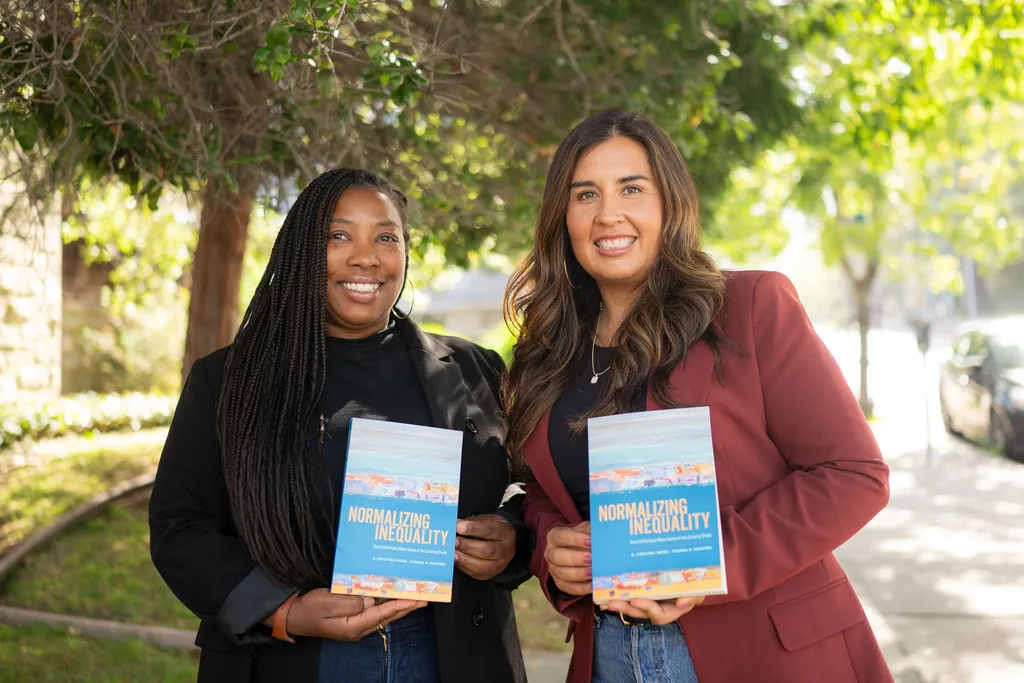
UC Berkeley professors G. Cristina Mora and Tianna Paschel explore how Californians reconcile their progressive identity with the state's significant wealth inequality in their book 'Normalizing Inequality.' Through interviews with middle-class residents, they identify three strategies people use to cope with the disparities around them. The book highlights the complexities of understanding inequality in a state known for its economic power yet plagued by poverty and segregation.
- ▪The book is based on 136 interviews with middle-class Californians about their views on inequality.
- ▪California has the highest poverty rate in the U.S. when cost of living is considered, despite having the fourth-largest economy in the world.
- ▪One-fourth of the nation's unhoused population resides in California, highlighting the state's wealth disparity.
Opening excerpt (first ~120 words) tap to expand
People, Politics & society, Profiles, Research How do Californians tolerate extreme inequality? In their new book, 'Normalizing Inequality,' UC Berkeley professors G. Cristina Mora and Tianna Paschel detail the mental gymnastics Golden State residents use to reconcile a progressive identity with a dramatic wealth gap. By Lila Thulin Tianna Paschel, a professor of African American Studies, and G. Cristina Mora, a professor of sociology, pose with their new book. Brandon Sánchez Mejia/UC Berkeley May 28, 2026 The 136 conversations took place in roughly the same way: Pleasantries would be exchanged, a recorder started, then UC Berkeley researchers asked middle-class Californians to dig deep.
…
Excerpt limited to ~120 words for fair-use compliance. The full article is at Berkeley News.
Discussion
0 commentsMore from Berkeley News