Homeless encampment sweeps spiked in Oakland after Supreme Court decision
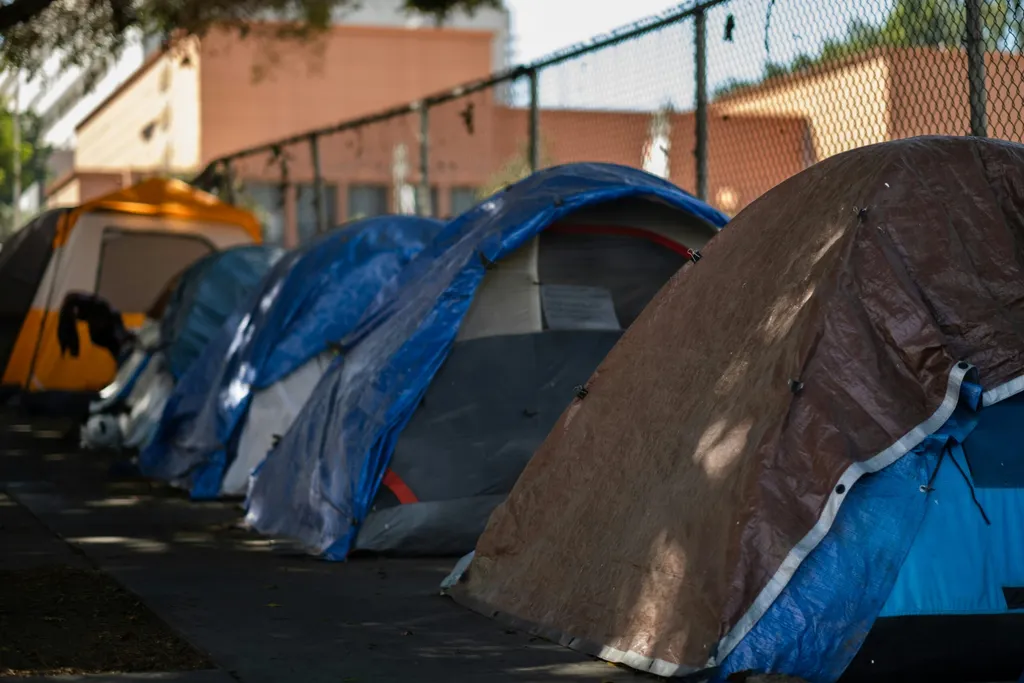
A recent study from UC Berkeley reveals that homeless encampment sweeps in Oakland have significantly increased following a Supreme Court decision. The average number of monthly sweeps more than doubled, raising concerns about the effectiveness of such measures in addressing homelessness. Researchers argue that these sweeps merely displace individuals rather than provide lasting solutions to their housing needs.
- ▪The average number of encampment sweeps in Oakland rose from 14.4 to 32.2 per month after the Supreme Court decision.
- ▪Many encampments have been closed multiple times, with one site being swept 18 times over four years.
- ▪The study suggests that sweeps are displacing homeless individuals into more vulnerable neighborhoods rather than solving homelessness.
Opening excerpt (first ~120 words) tap to expand
Campus news Homeless encampment sweeps spiked in Oakland after Supreme Court decision In the first analysis of its kind since the 2024 Grants Pass case, UC Berkeley researchers found the number of encampment sweeps significantly increased and spread. By Jason Pohl Before the U.S. Supreme Court made it easier for local governments to clear homeless encampments, crews in Oakland swept an average of 14.4 camps each month. That number more than doubled in the six months after the decision, averaging 32.2 per month. Levi Meir Clancy via Unsplash May 28, 2026 Officials in Oakland sharply increased the number of homeless encampments they cleared in the months after the 2024 U.S. Supreme Court decision made it easier for municipalities nationwide to do so, new research from UC Berkeley shows.
…
Excerpt limited to ~120 words for fair-use compliance. The full article is at Berkeley News.
Discussion
0 commentsMore from Berkeley News