WeSearch

Deep-ocean heat has been marching closer to Antarctica, reveals long-term study
·5 min read · 0 reactions · 0 comments · 1 view
Deep-ocean heat has been marching closer to Antarctica, reveals long-term study

A new decades-long study of oceanographic data provides the first evidence that deep-ocean heat has moved closer to Antarctica, threatening the fragile ice shelves that fringe the continent.

Original article
Phys.org
Read full at Phys.org →
Full article excerpt tap to expand

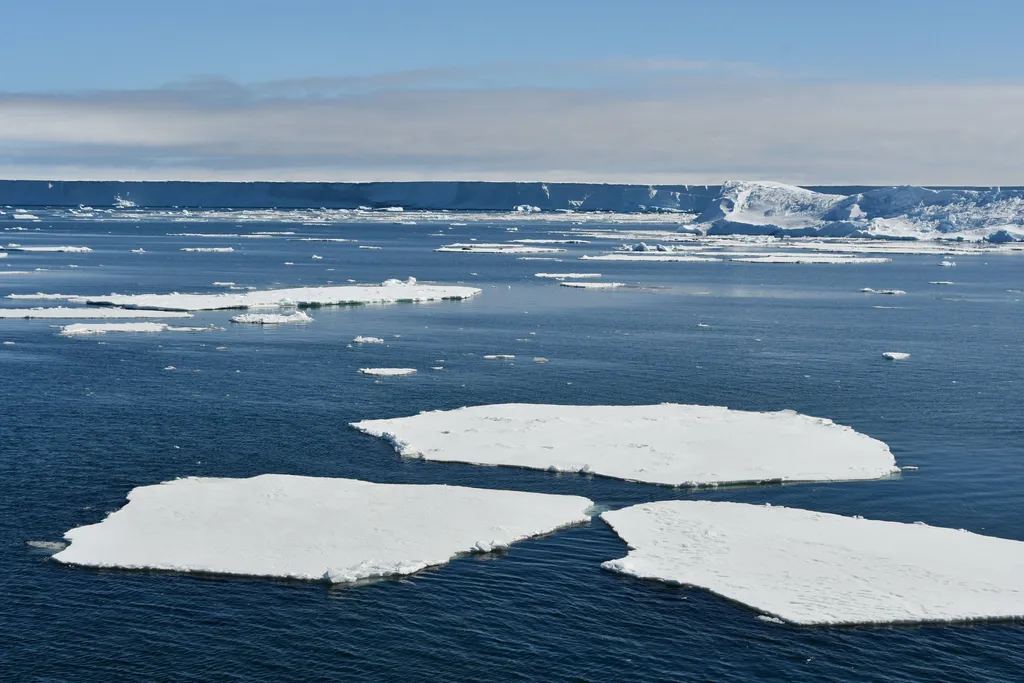
April 28, 2026 Deep-ocean heat has been marching closer to Antarctica, reveals long-term study by University of Cambridge edited by Sadie Harley, reviewed by Robert Egan Sadie Harley scientific editor Meet our editorial team Behind our editorial process Robert Egan associate editor Meet our editorial team Behind our editorial process Editors' notes This article has been reviewed according to Science X's editorial process and policies. Editors have highlighted the following attributes while ensuring the content's credibility: fact-checked peer-reviewed publication trusted source proofread The GIST Add as preferred source Bellingshausen Sea, Antarctica, taken onboard the R/V Falkor (too) in 2025. Credit: Laura Cimoli, University of Cambridge A new decades-long study of oceanographic data provides the first evidence that deep-ocean heat has moved closer to Antarctica, threatening the fragile ice shelves that fringe the continent. The study, published in Communications Earth & Environment and led by the University of Cambridge with collaborators from the University of California, compiled long-term ocean measurements collected by ships and robotic floating devices to show that a warm mass called "circumpolar deep water" has expanded and shifted toward the Antarctic continental shelf over the past 20 years. Previously, scientists hadn't had enough ocean observations to detect the warming trend. "It's concerning, because this warm water can flow beneath Antarctic ice shelves, melting them from below and destabilizing them," said Joshua Lanham, lead author of the study at Cambridge Earth Sciences. Ice shelves play an important role in holding back Antarctica's inland ice sheets and glaciers, which collectively hold enough freshwater to raise sea level by about 58 meters. It's the first time that scientists have observed the shift in deep-ocean heat throughout the Southern Ocean, said Lanham. "It's something that had been predicted by climate models due to global warming, but we hadn't seen it in the data." Argo floats, pictured here, are robotic devices that drift through the upper water column collecting real-time ocean data. A global network of these instruments provides continuous snapshots of the ocean, but the program hasn't been running as long as ships have been collecting detailed hydrographic sections. Credit: Scripps Institution of Oceanography, UC San Diego Previous observations of the Southern Ocean, which encircles Antarctica, were limited to transects recorded by ships roughly once a decade. This information, collected as part of a long-running international program, provided detailed snapshots of temperature, salinity, and nutrients throughout the water column but, without continuous data, scientists were more uncertain about long-term changes in heat distribution. To fill the gaps in the record, the researchers, including scientists from the Scripps Institution of Oceanography and UCLA, supplemented the ship measurements with publicly available data collected by a global array of autonomous floats, which drift through the upper ocean. These so-called Argo floats provide continuous snapshots of the ocean, but the program hasn't been running as long as ships have been collecting detailed hydrographic sections. Using machine learning, the researchers took the Argo float data and combined it with long-term patterns drawn from ships' measurements to build a new record capturing detailed monthly snapshots over the last four decades,…

This excerpt is published under fair use for community discussion. Read the full article at Phys.org.

Anonymous · no account needed
Share 𝕏 Facebook Reddit LinkedIn Email

Discussion

0 comments

More from Phys.org