Can LLMs Replace Survey Respondents?
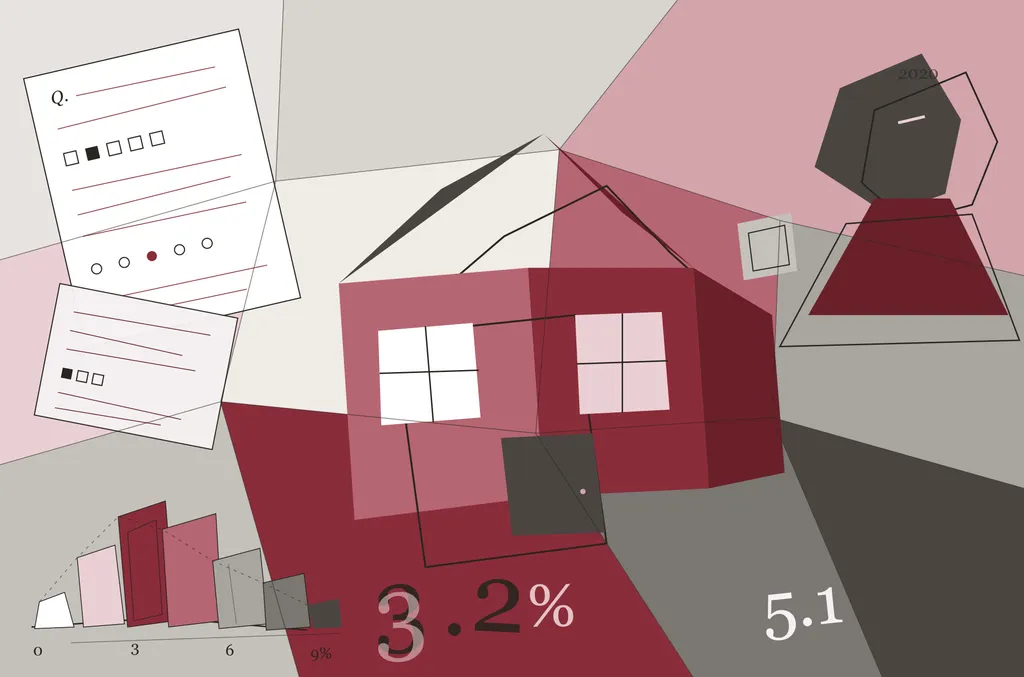
Recent research explores the potential of large language models (LLMs) to simulate household survey responses regarding inflation. While LLMs can replicate average responses closely, they struggle with representing the diversity of opinions found in real surveys. Techniques like unlearning are being investigated to improve the accuracy of LLM-generated responses by addressing issues like mode collapse.
- ▪LLMs can replicate average survey responses closely, achieving results within a percentage point of actual data.
- ▪However, LLMs tend to produce responses that lack the diversity of real-world opinions, often clustering around a narrow range.
- ▪Unlearning methods are being tested to enhance the dispersion of LLM responses and better reflect varied public opinions.
Opening excerpt (first ~120 words) tap to expand
Large Language Models Can LLMs Replace Survey Respondents? How unlearning fixes mode collapse in synthetic survey replies Moritz Pfeifer May 20, 2026 9 min read Share What happens when you ask an LLM to simulate 6,000 American households answering questions about inflation? Recent papers find that large language models can replicate the average responses of major household surveys to within a percentage point (Zarifhonarvar, 2026). In 2020, the Survey of Consumer Expectations (SCE) reported a one-year-ahead median inflation rate of about 3%. The median produced by a prompted LLM with realistic personas and a knowledge-cutoff instruction: also about 3%.
…
Excerpt limited to ~120 words for fair-use compliance. The full article is at Towards Data Science.
Discussion
0 commentsMore from Towards Data Science