America's Geothermal Breakthrough
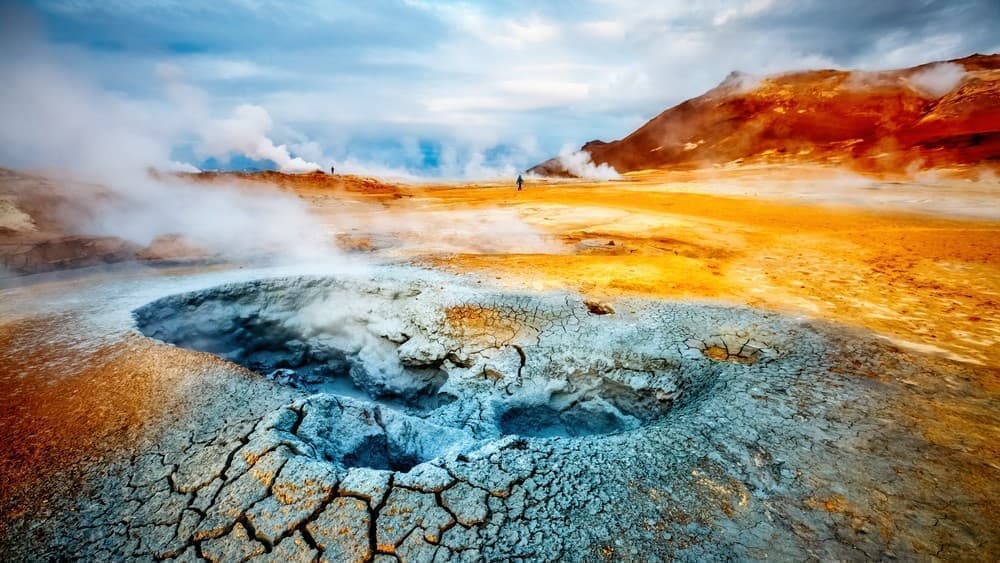
Enhanced geothermal systems are poised to dramatically expand U.S. clean energy capacity by unlocking vast underground heat resources and providing reliable, round-the-clock power.
Full article excerpt tap to expand
The United States’ geothermal energy sector has gradually expanded in recent years, as states look to diversify their energy mix. While several renewable energy sectors have struggled to stay afloat under the Trump administration, the government has continued to show support for geothermal energy development. Further, innovations in enhanced geothermal technologies are expected to support greater sectoral expansion in the coming years.Geothermal energy is generated by drilling into underground heat pockets in the Earth’s surface to access heat. The Earth’s core has a temperature of around 5,200°C, while rock and water in the Earth’s crust can reach temperatures of around 370°C. Energy operators typically drill reservoirs just a few miles underground to access thermal energy in the rocks, as well as warm water deposits. The heat is used to drive turbines to achieve carbon-free electricity production.California is home to 53 of the 99 U.S. geothermal power plants, while Nevada hosts 32 power plants, Oregon and Utah each have four plants, Hawaii and Alaska have two each, and Idaho and New Mexico each have one.Several companies are now building upon existing techniques for accessing geothermal resources by integrating enhanced geothermal systems (EGS) into operations. While conventional geothermal systems produce energy using hot water or steam, pumped from naturally occurring hydrothermal reservoirs trapped in rock formations underground, EGS use innovative drilling technologies, such as those used in fracking operations, to drill horizontally and create hydrothermal reservoirs where they don’t currently exist.EGS can help to further develop existing geothermal power generation sites and could support expansion to areas where geothermal resources cannot be easily accessed. The U.S. has a total summer capacity of around 2.7 GW of conventional geothermal power, contributing roughly 0.2 percent of the country’s summer production capacity. The U.S. Geological Survey estimates that the EGS offers 135 GW of clean energy production potential in the Great Basin of the U.S. Southwest alone, while other predictions suggest there could be up to 150 GW of production capacity. The first EGS power generator in the United States is currently under development and is expected to launch in 2026.The Houston-based startup Fervo Energy is leading the race to produce geothermal power in the U.S., with plans to continue expanding operations in the coming years. Fervo signed a three-year deal with the power generation technology firm Turboden America, which will provide the geothermal company with 1.75 GW of organic Rankine cycle turbine capacity for its new geothermal projects.Paolo Bertuzzi, the president of Turboden America, said in a statement, “Geothermal energy will be essential in stabilising a strained power grid with clean, firm energy, and Fervo has shown strong leadership in advancing the sector,” Bertuzzi added, “With this announcement, we are prepared to scale delivery in the U.S. market and add megawatts of new generation wherever and however they are required."Fervo will use the equipment to convert heat trapped underground into clean electricity to deliver power to the grid, as well as to run data centres. The company is currently developing the first 100 MW of its 500-MW Cape Station in Beaver County, Utah, which, once launched later this year, is expected to be the world’s largest EGS. The Cape Station is thought to have as much as 4.3 GW of…
This excerpt is published under fair use for community discussion. Read the full article at OilPrice.com.
Discussion
0 commentsMore from OilPrice.com