A Boomer, But An Augustinian: On Magnifica Humanitas
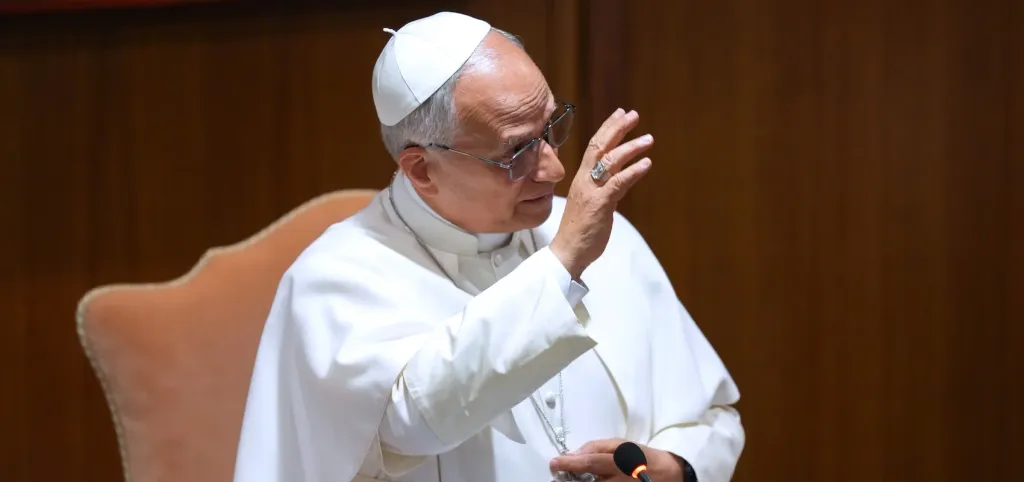
Pope Leo XIV's first encyclical, Magnifica Humanitas, emphasizes the importance of safeguarding human dignity in the age of artificial intelligence. It critiques the technocratic paradigm that reduces life to efficiency and control, advocating instead for a civilization of love rooted in ethical and spiritual frameworks. The document calls for a balanced approach to technology, promoting human relationships and communion over mere optimization.
- ▪The encyclical begins with a reference to the Tower of Babel, symbolizing the dangers of technological grandiosity.
- ▪Pope Leo XIV argues that human limitations should be cherished as integral to human dignity.
- ▪The document encourages using technology to foster human dignity and the common good, rather than succumbing to technocratic thinking.
Opening excerpt (first ~120 words) tap to expand
A Boomer, But An Augustinian: On Magnifica Humanitas Jacob Phillips May 25, 2026 Share Article Pope Leo XIV’s first encyclical, on safeguarding the human person in the time of artificial intelligence, begins with the Tower of Babel (Gen. 11:1–9). Babel represents the grandiosity of our technological age, of attempting to surpass our creaturely nature and thereby preclude communion with God. Limitations are integral to human dignity; they are to be cherished and protected, not wished away. There is thus an inherent grandeur to being human, and particularly to organic, human intelligence. The natural capacities with which we are endowed as creatures of God are relational, and therefore moral and spiritual.
…
Excerpt limited to ~120 words for fair-use compliance. The full article is at First Things.