Your Browser Probably Lies to the Big Sites (Blame Chrome)
Some browsers like Firefox and Safari alter their behavior when visiting large websites to ensure compatibility, often mimicking Chrome due to its market dominance. This adjustment can include misrepresenting their identity or changing how pages are rendered to prevent display issues. The changes are made to protect user experience rather than stem from collusion between browsers and major sites.
- ▪Chrome's dominance leads websites to optimize for it, sometimes breaking functionality in other browsers.
- ▪Firefox and Safari adapt their behavior to work around sites that don't function correctly outside Chrome.
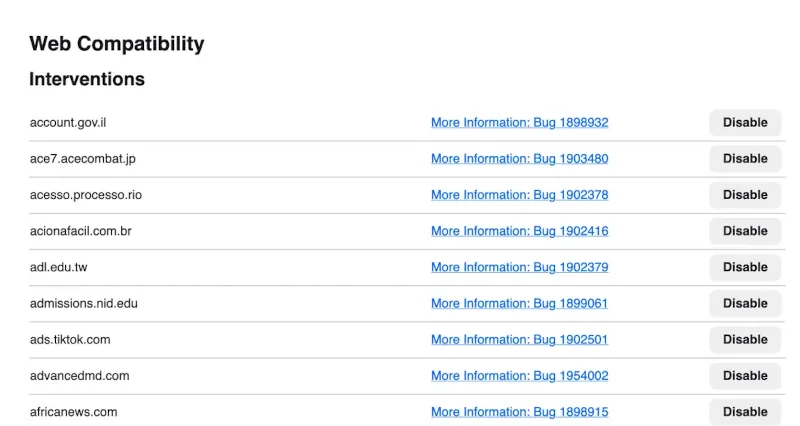
- ▪Users can view and disable specific compatibility fixes in Firefox by visiting the about:compat URL.
- ▪Safari's compatibility adjustments are documented in a file named quirks, requiring code inspection.
- ▪Bugzilla tracks the compatibility fixes implemented by Firefox for problematic websites.
Opening excerpt (first ~120 words) tap to expand
Your Browser Probably Lies To The Big Sites (Blame Chrome) No comments by: Al Williams May 16, 2026 Title: Copy Short Link: Copy When you visit certain large sites in Firefox or Safari, the browser may detect your visit and change its behavior. It could be as simple as lying about its identity, or it may totally change how it renders the page. But according to a post by [Den Odel], this isn’t a conspiracy between browsers and big Internet — rather, it is a byproduct of Chrome’s dominance. Here’s how it goes. Chrome puts out a new feature and everyone rushes to implement it on their site. Maybe the new code breaks other browsers. Maybe the other browser supports the feature, but the website doesn’t detect it correctly or is unaware. Maybe it just relies on some quirk of Chrome.
…
Excerpt limited to ~120 words for fair-use compliance. The full article is at Hackaday.
Discussion
0 commentsMore from Hackaday