With 5th Circuit's Temporary Block of Abortion Pill by Mail, Louisiana v. FDA Might Get SCOTUS Review
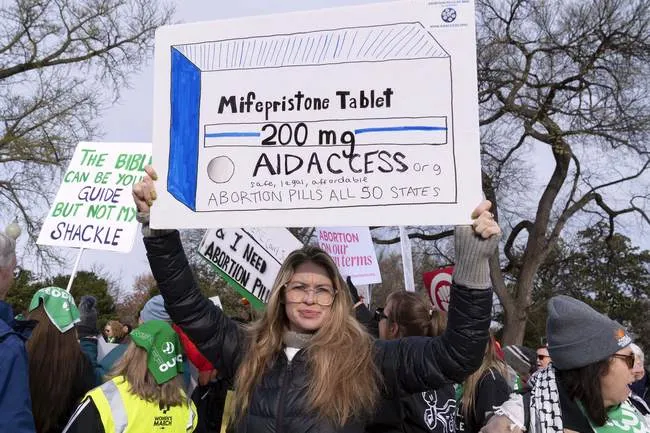
The Fifth Circuit Court of Appeals temporarily blocked the FDA's 2023 rule change that allowed mifepristone, the abortion pill, to be distributed by mail and over the counter. The ruling stems from Louisiana v. FDA, in which the court found Louisiana likely to succeed in challenging the rule due to inadequate safety review. The decision may pave the way for the case to be reviewed by the Supreme Court.
- ▪The Fifth Circuit temporarily blocked the FDA's 2023 rule allowing mifepristone to be dispensed by mail and over the counter.
- ▪Louisiana Attorney General Liz Murrill hailed the decision as a victory for pro-life efforts and protection of women and babies.
- ▪The court stated the public interest requires halting a medical practice whose safety the FDA admitted was inadequately studied.
- ▪A lower court previously ruled Louisiana and abortion drug coercion survivor Rosalie Markezich would likely win the case but had denied immediate relief.
- ▪The FDA changed the REMS rule after the 2022 Dobbs v. Jackson Women's Health decision, enabling broader access to mifepristone through certified pharmacies.
Opening excerpt (first ~120 words) tap to expand
With 5th Circuit's Temporary Block of Abortion Pill by Mail, Louisiana v. FDA Might Get SCOTUS Review By Jennifer Oliver O'Connell | 8:40 PM on May 02, 2026 The opinions expressed by contributors are their own and do not necessarily represent the views of RedState.com. AP Photo/Jose Luis Magana On Friday, the Fifth Circuit United States Court of Appeals issued a ruling in the case of Louisiana v. FDA, which rendered a major blow to the abortion industry. The Fifth Circuit temporarily blocked the 2023 changes the Food and Drug Administration (FDA) made to its risk evaluation and mitigation strategy (REMS) rule, which allowed the abortion pill Mifepristone to be distributed over the counter and by mail, without medical safeguards or supervision.
…
Excerpt limited to ~120 words for fair-use compliance. The full article is at RedState.
Discussion
0 commentsMore from RedState