Why the largest-ever US-Philippine drill, and Japan's role in it, is making China uneasy
The recent Balikatan military exercises between the U.S. and the Philippines have reached unprecedented levels of participation and complexity, involving seven countries and 17,000 personnel. This year's drills have raised concerns in China, with experts warning that such military activities could increase regional instability. The exercises are seen as a rehearsal for potential conflicts in the Indo-Pacific, particularly regarding Taiwan.
- ▪The Balikatan drills involved 17,000 personnel from seven countries, including the U.S., Philippines, and Japan.
- ▪Chinese experts have warned that the scale of the exercises could exacerbate regional instability.
- ▪The drills included long-range maneuvers and simulated amphibious landings, indicating preparations for potential conflicts.
Opening excerpt (first ~120 words) tap to expand
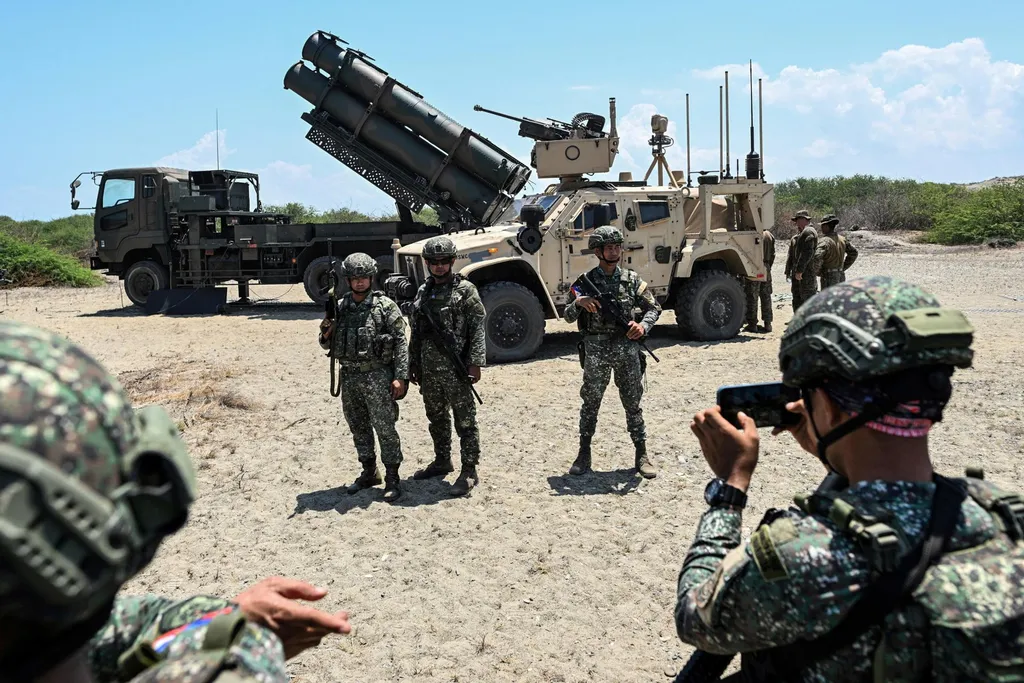
Philippine soldiers pose for a picture in front of the Japan Ground Self-Defense Force (JGSDF) Type 88 surface-to-ship missile launcher and the U.S. Marine Air Defense Integrated System (MADIS), during the Joint Task Force (JTF) Maritime Strike, part of Balikatan, the annual joint military exercises between the United States and the Philippines, at Culili Point Sand Dunes, Paoay, Ilocos Norte province, Philippines, May 6. Reuters-YonhapA U.S. and Philippine-led military drill seen as targeting China grew this year into the largest yet, prompting Chinese experts to warn that the annual event will exacerbate regional instability amid heightened tensions in the Indo-Pacific.The decades-old drill called Balikatan, which means shoulder to shoulder, reached record highs in terms of scale, scope…
Excerpt limited to ~120 words for fair-use compliance. The full article is at Korea Times.
Discussion
0 commentsMore from Korea Times