Why Asia’s Not Buying What Hegseth’s Selling

U.S. Defense Secretary Pete Hegseth's speech at the Shangri-La Dialogue in Singapore did not resonate well with the audience. His comments on partnerships based on national interests and military spending were met with skepticism, particularly in a region that values multilateralism. The response highlights the challenges the U.S. faces in aligning its foreign policy with the priorities of Southeast Asian nations.
- ▪Hegseth's speech at the Shangri-La Dialogue prompted snorts from the audience, indicating a lack of resonance.
- ▪He emphasized that partnerships should be based on national interests rather than idealistic values, which contrasts with ASEAN's multilateral approach.
- ▪Many Southeast Asian nations are wary of deeper entanglement with U.S. security, especially given their historical defense spending levels.
Opening excerpt (first ~120 words) tap to expand
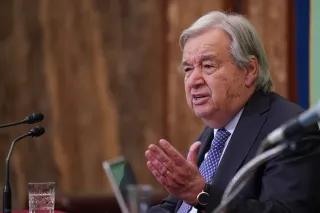
Southeast Asia Brief A weekly dispatch on the politics, economics, and culture of a pivotal region, caught between China and the United States but still going its own way. Written by Bangkok-based journalist Joseph Rachman. Why Asia’s Not Buying What Hegseth’s Selling A Shangri-La charm offensive collided with regional values. Joseph Rachman: A pencil drawing of a man wearing glasses in a t-shirt Joseph Rachman By Joseph Rachman, the writer of Foreign Policy’s weekly Southeast Asia Brief. A man with slicked-back graying hair and a tan complexion stands at a podium in profile, speaking into dual microphones. He is wearing a slate blue suit jacket, a white collared shirt, and a striped tie.
…
Excerpt limited to ~120 words for fair-use compliance. The full article is at Foreign Policy.
Discussion
0 commentsMore from Foreign Policy