What actually makes hybrid cars fuel-efficient?
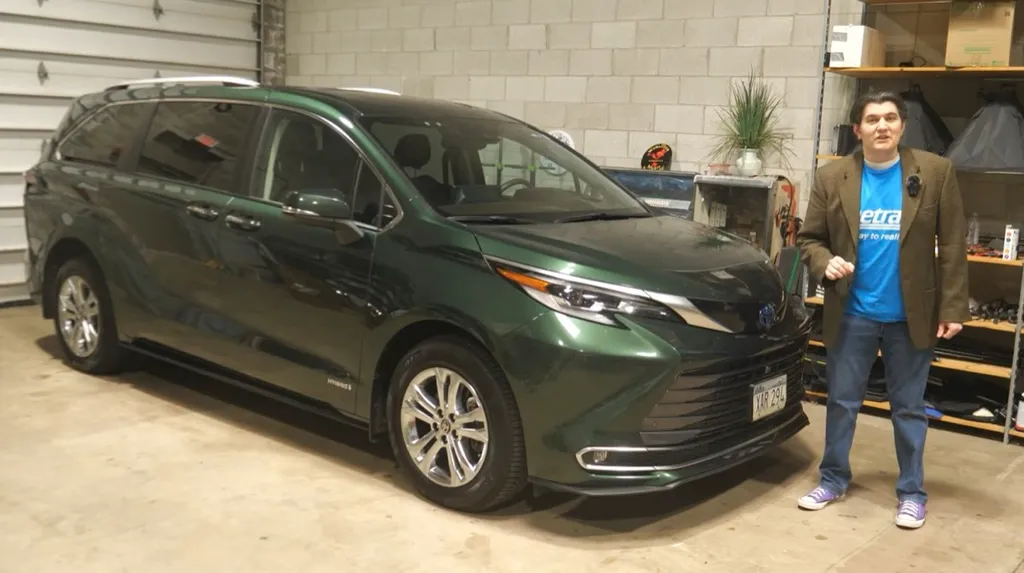
Hybrid cars, like the 2021 Toyota Sienna, achieve fuel efficiency through a unique engine design rather than just relying on batteries and electric motors. The Sienna uses an Atkinson cycle engine, which is more thermodynamically efficient than traditional Otto-cycle engines. This design allows the hybrid system to compensate for the Atkinson engine's lack of peak power, maintaining efficiency during regular driving conditions.
- ▪The 2021 Toyota Sienna achieves 34 mpg, outperforming its competitors by over 50%.
- ▪The Sienna's engine operates on the Atkinson cycle, which was patented in 1887.
- ▪Atkinson engines have around 41% thermal efficiency, compared to 25% for typical Otto engines.
Opening excerpt (first ~120 words) tap to expand
What actually makes hybrid cars fuel-efficient? Ellsworth Toohey 10:29 am Wed May 20, 2026 Technology Connections / YouTube The 2021 Toyota Sienna is a three-row AWD minivan that gets 34 mpg city and highway — beating its nearest rivals by more than 50%. Most people assume the batteries and electric motors explain that number. Alec Watson at Technology Connections has made a 55-minute deep dive on why that assumption is wrong, and the actual answer goes back to 1887. The Sienna's 2.5-liter engine runs on the Atkinson cycle, a thermodynamic trick patented by James Atkinson in 1887. A conventional Otto-cycle engine — the four-stroke design in almost every car you've ever driven — wastes energy because the compression and power strokes are the same length.
…
Excerpt limited to ~120 words for fair-use compliance. The full article is at Boing Boing.
Discussion
0 commentsMore from Boing Boing