Virtualisation on Apple Silicon Macs is different
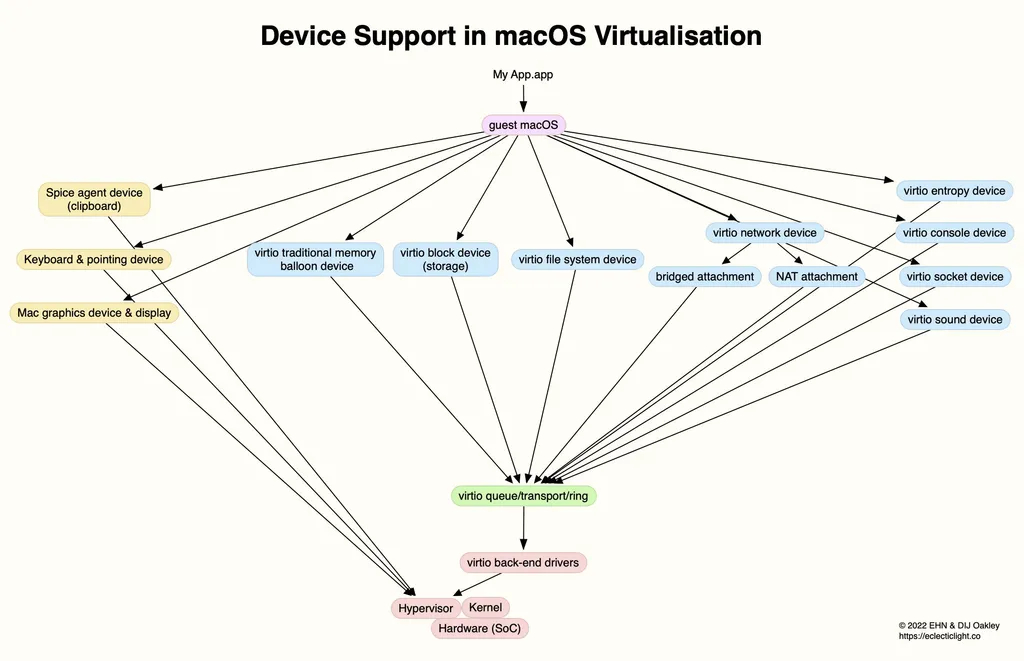
Virtualisation on Apple silicon Macs differs from Intel-based Macs due to architectural changes, requiring Apple to integrate virtualisation directly into macOS. Instead of relying on third-party solutions, Apple uses a hypervisor and Virtio drivers to enable efficient virtual machines for Arm-based operating systems. This approach ensures high performance but limits third-party vendors' ability to enhance features like graphics support.
- ▪Apple integrated virtualisation into macOS for Apple silicon Macs because running different processor architectures required a new approach.
- ▪Apple uses Virtio drivers to abstract hardware devices, improving efficiency and reducing the burden on third-party virtualisation developers.
- ▪Virtio support was added to macOS starting with Monterey, limiting lightweight virtualisation to macOS Monterey and later versions.
- ▪The Virtio model shifts responsibility for features like graphics, input devices, and clipboard sharing to the operating system rather than the virtualiser app.
- ▪Benchmark tests show virtual machines on Apple silicon achieve near-native CPU and GPU performance, with minor differences compared to host performance.
Opening excerpt (first ~120 words) tap to expand
hoakley April 29, 2026 Macs, Technology Virtualisation on Apple silicon Macs is different Before Apple silicon Macs, you’ve been able to run different versions of macOS, Linux or Windows in third-party virtualisers, such as those from VMware and Parallels. Those products enable a virtual machine running a different operating system to be hosted in macOS, both running code for Intel processors. As part of its engineering preparations for the switch to using Arm processors, Apple decided that the only practical way to support virtualisation on its new Mac hardware was to build it into macOS. This was to enable older versions of macOS, and other operating systems including Linux and Windows for Arm, to run in virtual machines.
…
Excerpt limited to ~120 words for fair-use compliance. The full article is at The Eclectic Light Company.
Discussion
0 commentsMore from The Eclectic Light Company