Using 3D Printers To Make Circuit Boards
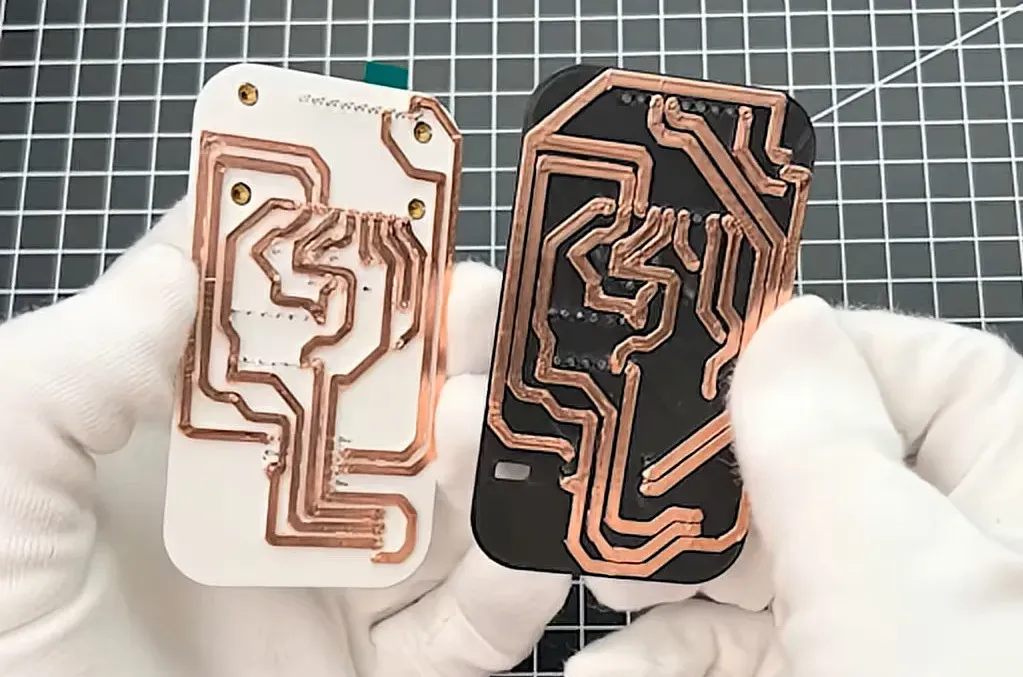
3D printing technology is being utilized to create circuit boards more quickly and accessibly for hobbyists. The process involves designing a PCB in KiCad, extruding traces in 3D CAD software, and using copper tape to make the board conductive. While these printed circuit boards may not be production-ready, they serve well for simple microcontroller projects.
- ▪Custom printed circuit boards have become more accessible to hobbyists over the last decade.
- ▪The PCB design process starts with creating a schematic and laying it out in KiCad.
- ▪The traces on the PCB are made very thick and extruded to be 2 mm tall in 3D CAD software.
Opening excerpt (first ~120 words) tap to expand
Using 3D Printers To Make Circuit Boards No comments by: Julian Scheffers May 19, 2026 Title: Copy Short Link: Copy Custom printed circuit boards have become more and more accessible to the average hobbyist over the last decade. But one problem still remains: your circuits will take at least a couple days to make. But what if you needed some really rapid prototypes? [The Raccoon Lab] shows us how to do it with a 3D printer. You start with the usual hobby PCB pipeline: take your idea, make a schematic, and then lay it out in KiCad. That’s where the changes start: to keep traces strong, they are made very thick. The PCB is then exported and opened in 3D CAD software, where the traces are extruded to be 2 mm tall.
…
Excerpt limited to ~120 words for fair-use compliance. The full article is at Hackaday.
Discussion
0 commentsMore from Hackaday