Unusual ant interaction hints at mutualistic ‘cleaning’ system
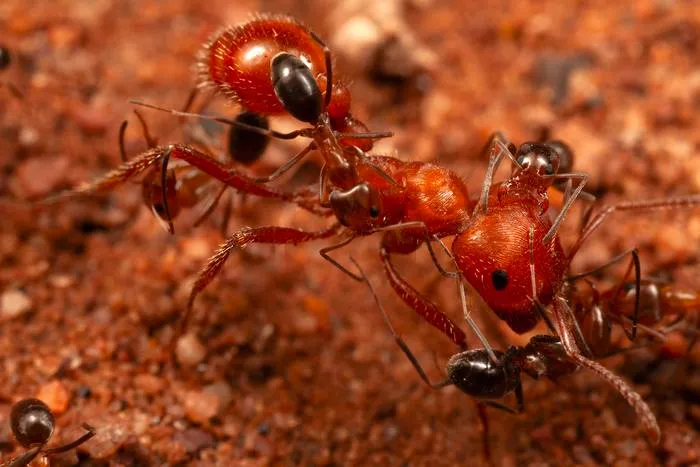
Entomologist Mark Moffet observed cone ants licking and nibbling harvester ants in Arizona, suggesting a potential mutualistic cleaning relationship similar to coral reef cleaning stations. The harvester ants remained passive, and some even approached cone ant nests, indicating possible cooperation. While the exact benefits are unclear, hypotheses include microbial exchange, antifungal protection, or feeding on seed dust in return for cleaning services.
- ▪Mark Moffet observed at least 90 harvester ant workers being tended by cone ants in the Chiricahua Mountains of Arizona.
- ▪The cone ants were seen inspecting and cleaning the harvester ants, including their open mandibles, without triggering aggression.
- ▪Possible benefits include exchange of microbes, pheromones, antifungal substances, or feeding on calorie-rich seed dust from the harvester ants.
- ▪Moffet suggests this interaction could be a form of mutualism, but further research is needed to confirm the nature of the relationship.
- ▪Ant biologist Daniel Kronauer described the observation as unique and potentially influential for future research directions.
Opening excerpt (first ~120 words) tap to expand
(function($) { $(document).ready(function() { const bulletPoints = $('.bulletpoints'); const toggle = $('.bulletpoints-wrapper .content-expander'); if (bulletPoints.length > 0) { const bulletPointsHeight = bulletPoints[0].scrollHeight; if (bulletPointsHeight && bulletPointsHeight <= 170) { toggle.remove(); } toggle.click(function() { bulletPoints.toggleClass('visible'); $('#expander-container.bullets').toggleClass('visible'); $(this).toggleClass('visible'); }); } }); })(jQuery); Some coral reef ecosystems famously have “cleaning stations,” where fish line up to be cleaned by other species of fish and shrimp. Entomologist Mark Moffet recently published observations of what appears to be a similar relationship in ants. In the Chiricahua Mountains of the U.S.
…
Excerpt limited to ~120 words for fair-use compliance. The full article is at Mongabay — News.
Discussion
0 commentsMore from Mongabay — News