Twilight of the Velocipede: Typesetting Races Before the Age of Linotype
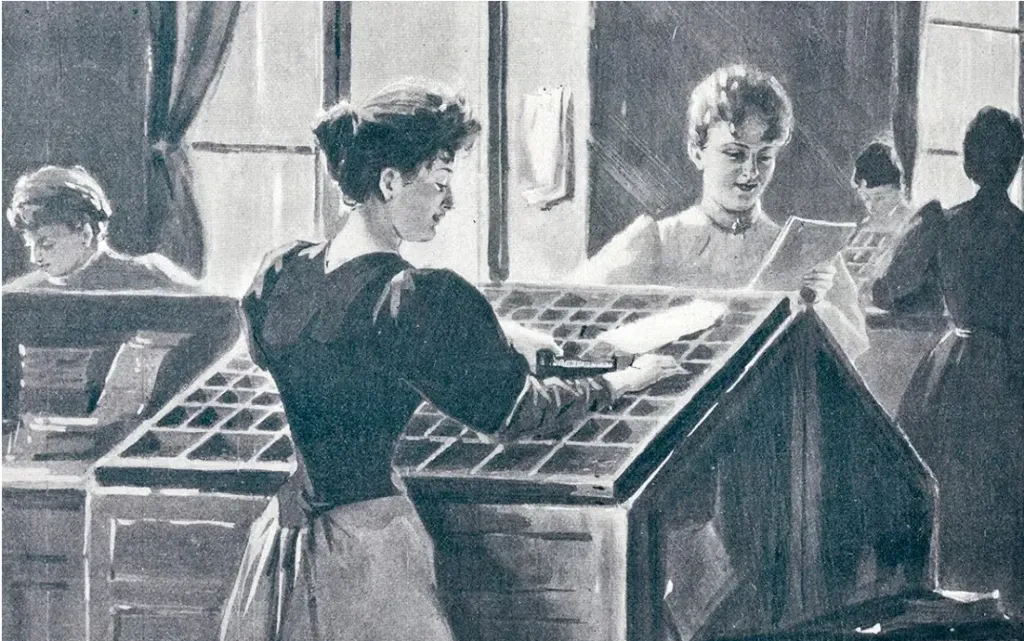
The article discusses the various attempts to create typesetting machines before the advent of Linotype. Despite numerous inventions and patents, none of the machines were able to replace manual typesetting effectively. The challenges included technical complexities and reliability issues that hindered their widespread adoption.
- ▪William Church patented a typesetting machine in 1810, but it was primitive and ineffective.
- ▪James Hedden Young and Adrien Delcambre introduced the 'pianotype' in the 1840s, which was too delicate for regular use.
- ▪Over three hundred patents for typesetting machines were issued throughout the century, yet none could replace manual compositors.
Opening excerpt (first ~120 words) tap to expand
Inventors had been trying for decades. As far back as 1810, a Vermont doctor named William Church patented a machine with a primitive keyboard for dropping type into a stick. Three decades later in Paris, James Hedden Young and Adrien Delcambre unveiled their “pianotype”, an improbable-looking contraption with piano-like keys and metal chutes; but it proved too delicate for regular use. In the 1850s, US inventor William Mitchell produced an ingenious “compositor” machine, but it failed to solve the thorny technical problem of justification.
…
Excerpt limited to ~120 words for fair-use compliance. The full article is at The Public Domain Review.
Discussion
0 commentsMore from The Public Domain Review