Trump-Xi summit didn’t change North Korea’s strategic reality
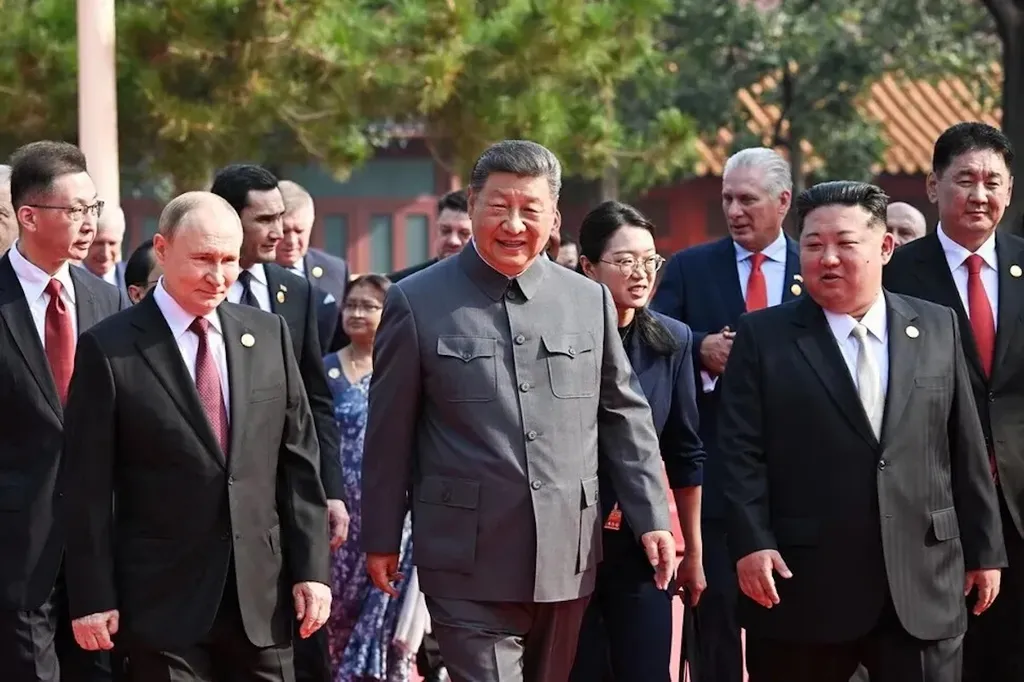
The Trump-Xi summit in Beijing highlighted a facade of calm but did not signify a true strategic alignment between the U.S. and China regarding North Korea. The relationship is characterized by constrained rivalry rather than cooperation, with both nations focused on maintaining their competitive edge. As a result, hopes for significant U.S.-China collaboration on North Korea are unrealistic, given their diverging interests.
- ▪The summit projected an image of stability but did not lead to strategic convergence on North Korea.
- ▪Both Washington and Beijing are engaged in bounded strategic competition rather than outright confrontation.
- ▪China's approach to North Korea is driven by its own strategic interests, which do not align with those of the U.S.
Opening excerpt (first ~120 words) tap to expand
The Trump-Xi summit in Beijing may have projected calm at the leader level, but it should not be mistaken for strategic convergence. Whatever one makes of the new language of “constructive strategic stability,” the underlying reality is one of constrained rivalry, not cooperation. That distinction matters greatly when it comes to North Korea. The Trump administration’s China policy increasingly resembles bounded strategic competition rather than unconstrained confrontation. This is not détente in the Cold War sense. It is a transactional effort to reduce the immediate risks of conflict while preserving long-term competition in military power, advanced technology and geopolitical influence. Both Washington and Beijing appear intent on buying time.
…
Excerpt limited to ~120 words for fair-use compliance. The full article is at Asia Times.
Discussion
0 commentsMore from Asia Times