
Tough Fungi Could Survive the Trip to Mars
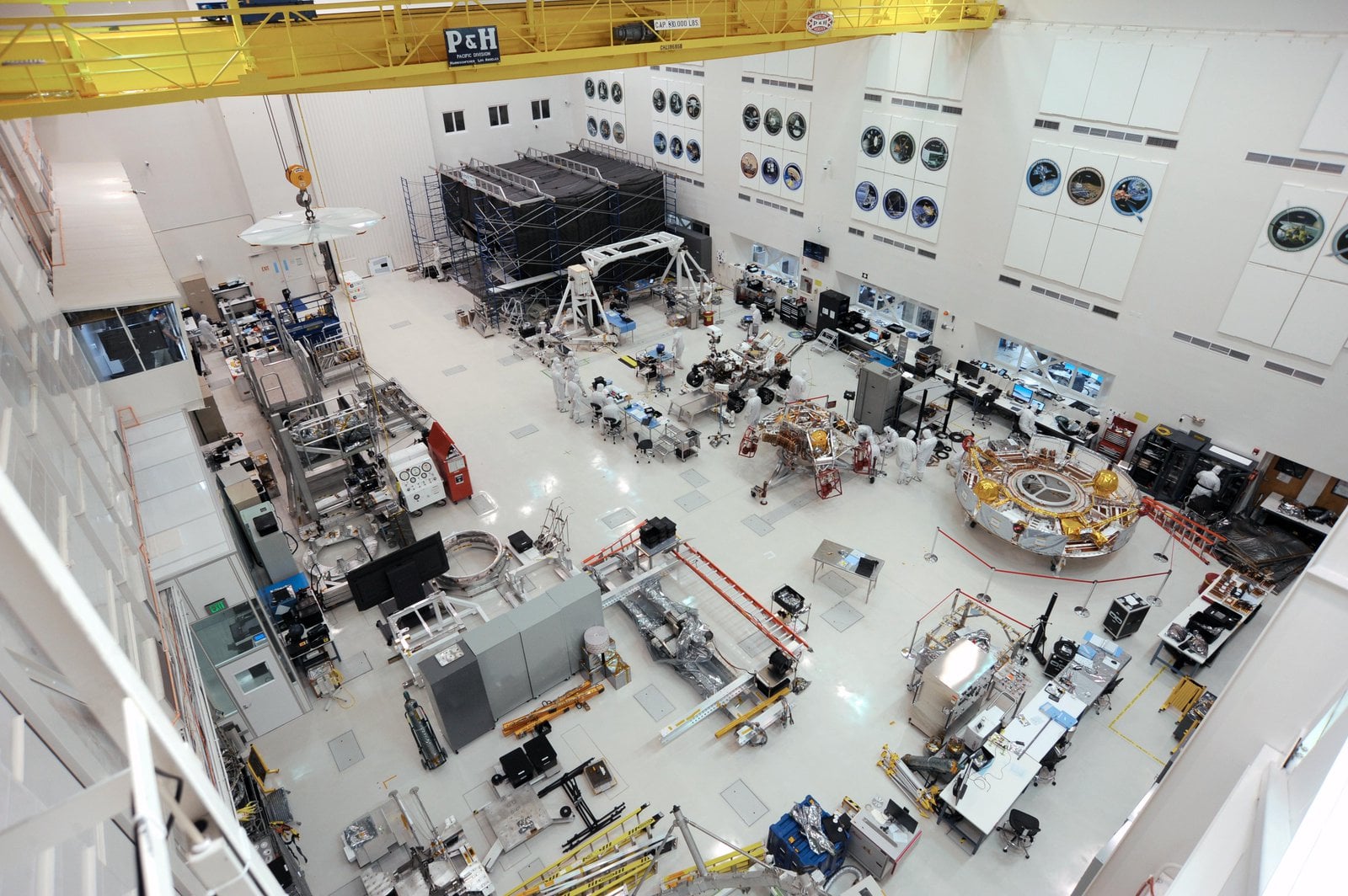
NASA and other space agencies spend a lot of time and money considering the cleanliness of their missions. Billions of dollars are spent in and on cleanrooms every year, with the express effort of ensuring both that the equipment operates without interference, but also that we don’t accidentally contaminate our exploration target with life from Earth itself. So far, we have primarily focused on bacteria in our efforts to stop this contamination, but according to a new paper by Atul M. Chander of NASA Jet Propulsion Laboratory and his co-authors, we might be missing an entirely different threat - fungi.
Full article excerpt tap to expand
Tough Fungi Could Survive the Trip to Mars By Andy Tomaswick - April 28, 2026 02:03 PM UTC | Astrobiology High Bay 1 at JPL, which likely has some fungi living somewhere within it, even while the Mars 2020 rover was being worked on in it. Credit - NASA/JPL-Caltech NASA and other space agencies spend a lot of time and money considering the cleanliness of their missions. Billions of dollars are spent in and on cleanrooms every year, with the express effort of ensuring both that the equipment operates without interference, but also that we don’t accidentally contaminate our exploration target with life from Earth itself. So far, we have primarily focused on bacteria in our efforts to stop this contamination, but according to a new paper by Atul M. Chander of NASA Jet Propulsion Laboratory and his co-authors, we might be missing an entirely different threat - fungi. Typical cleanroom protocols, which include “bunny suits” for engineers and 50+ hour baths in 110℃ temperatures (known as Dry-Heat Microbial Reduction, DHMR), are designed to kill bacteria. Specifically, to kill strains of the Bacillus genus, thought to be the toughest bacteria to kill. The thought process was simple - if you could kill Bacillus you could kill everything else. But there’s a whole other branch of the tree of life that was ignored - fungi. We’ve known for a while that fungi are common, even in NASA’s cleanrooms. In fact, the researchers found 23 different fungi strains cultured from NASA cleanrooms themselves. That leads to an obvious question, though - are these fungi species actually a threat to other planets, or extraterrestrial human habitats that we happen to build? Fraser discusses how Mars resists contamination To answer the question, the researchers put the fungal strain - specifically a type of fungal spore called a conidia - through a series of rigorous environmental tests. Designed to mimic the trip to and surface of Mars, these tests were the best attempt at simulating what the fungi would experience on an interplanetary trip. They included radiation, low pressure atmosphere, and even exposure to synthetic Martian regolith, as well as the typical DHMR protocol used to sterilize the equipment. So did any of the fungal strains still pose a problem after all of these potentially lethal experiments? The simplest answer seems to be yes - at least one in particular appears to. Aspergillus calidoustus demonstrated an extremely high level of survival. It withstood 1,440 minutes (24 hours) of continuous Martian solar radiation and remained viable under Martian atmospheric pressure and regolith exposure (which, admittedly, didn’t include perchlorates - arguably the most deadly component of Martian soil). In essence this means that, if A. calidoustus was launched on a mission to Mars, after having survived the decontamination of a cleanroom, there is a chance it might survive down to the surface. And once there it might survive on the surface itself, at least for a little while. If the mission happens to land in or near a “Special Region” of Mars where liquid water might occasionally exist underground, some of the spores could even wake up and start asexually reproducing. Fraser discusses how bacteria might survive on Mars. That is a nightmare scenario for planetary protection officers. But it’s also an issue for habitat designers. The last thing you want living in your air vents of a space habitat is a fungus that can survive space travel and is resistant to…
This excerpt is published under fair use for community discussion. Read the full article at Universe Today.