This 260-Million-Year-Old Reptile Fossil Is Reshaping the Story of Turtle Evolution
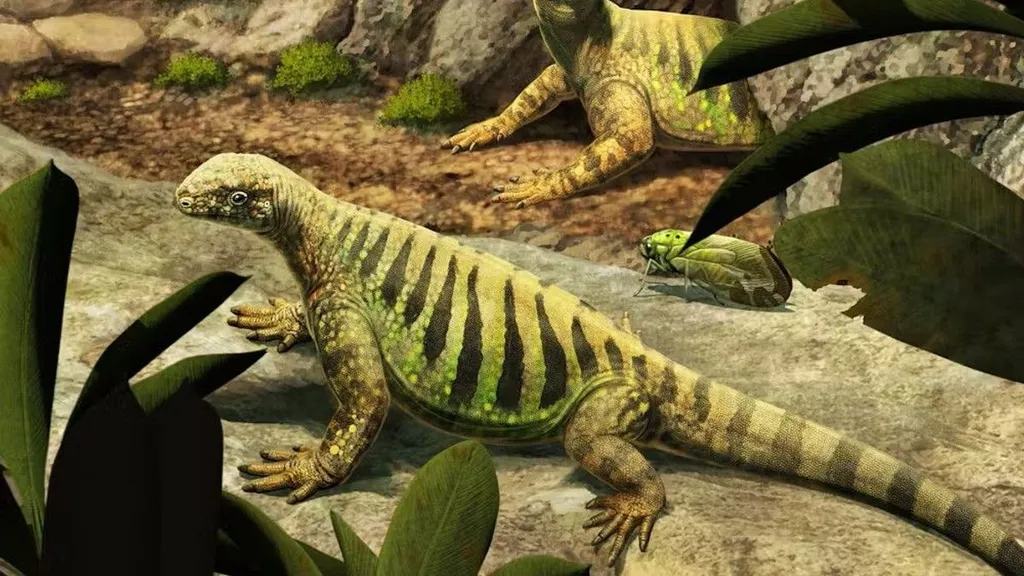
A recent study has redefined the evolutionary history of turtles by examining the fossil Eunotosaurus africanus. Researchers found that this 260-million-year-old reptile is not an early turtle but belongs to a separate lineage that independently developed turtle-like features. This discovery aligns fossil evidence with genetic studies, suggesting turtles are closely related to archosaurs.
- ▪Eunotosaurus africanus was previously thought to be an early ancestor of turtles.
- ▪CT scans revealed that Eunotosaurus is more closely related to millerettids, a group of extinct stem reptiles.
- ▪The study suggests that the turtle lineage diverged from archosaurs later than previously believed.
Opening excerpt (first ~120 words) tap to expand
Eunotosaurus africanus seemed to capture an early stage in turtle evolution. It had wide, flattened ribs, a shortened trunk, and a body that, to generations of paleontologists, looked unmistakably like a shell in the making.For nearly two decades, the 260-million-year-old reptile sat near the base of the turtle family tree, offering one of the earliest clues to how turtles began evolving their shells. Then, a team of researchers looked inside its skull.In a new study published in Current Biology, researchers used CT scanning to examine the internal anatomy of Eunotosaurus in new detail.
…
Excerpt limited to ~120 words for fair-use compliance. The full article is at Discover Magazine.
Discussion
0 commentsMore from Discover Magazine