The Supreme Court Finally Ends the Racial Districting Game
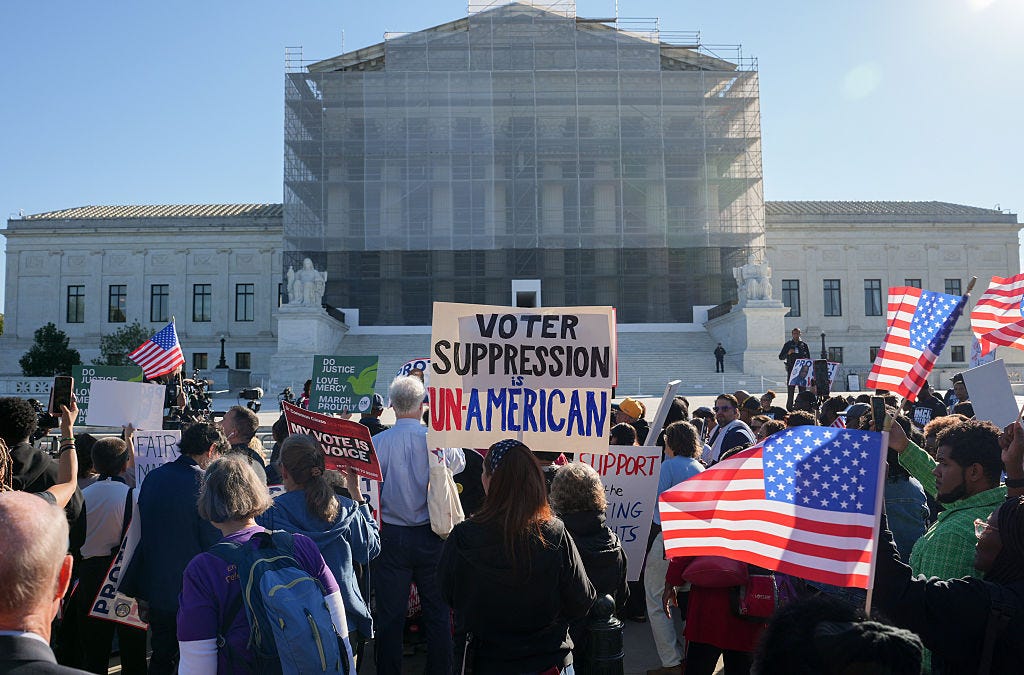
The Supreme Court ruled in Louisiana v. Callais that creating majority-minority congressional districts based on race violates the Constitution, declaring racial gerrymandering 'odious to a free people.' The decision challenges the use of race as a primary factor in redistricting, even when intended to comply with the Voting Rights Act. While some predict significant political shifts in future elections, analysts suggest the actual impact on House control may be limited.
Opening excerpt (first ~120 words) tap to expand
The Supreme Court Finally Ends the Racial Districting GameDemonstrators outside the Supreme Court in Washington, D.C., on Wednesday, October 15, 2025. (Eric Lee/Bloomberg via Getty Images)A majority of the justices declared that dividing voters by race is ‘odious to a free people.’By Jed Rubenfeld04.30.26 — U.S. PoliticsFOLLOW COLUMN --:----:--Upgrade to Listen5 minsProduced by ElevenLabs using AI narration510In a blockbuster ruling, the Supreme Court just struck down a Louisiana redistricting map because the state legislature, attempting to comply with the Voting Rights Act, had deliberately created a “majority-minority” district—a district where blacks were a majority.
…
Excerpt limited to ~120 words for fair-use compliance. The full article is at The Free Press.
Discussion
0 commentsMore from The Free Press