The invisible fabric of AI: chips aren't a US-China war, but a 30-country chain
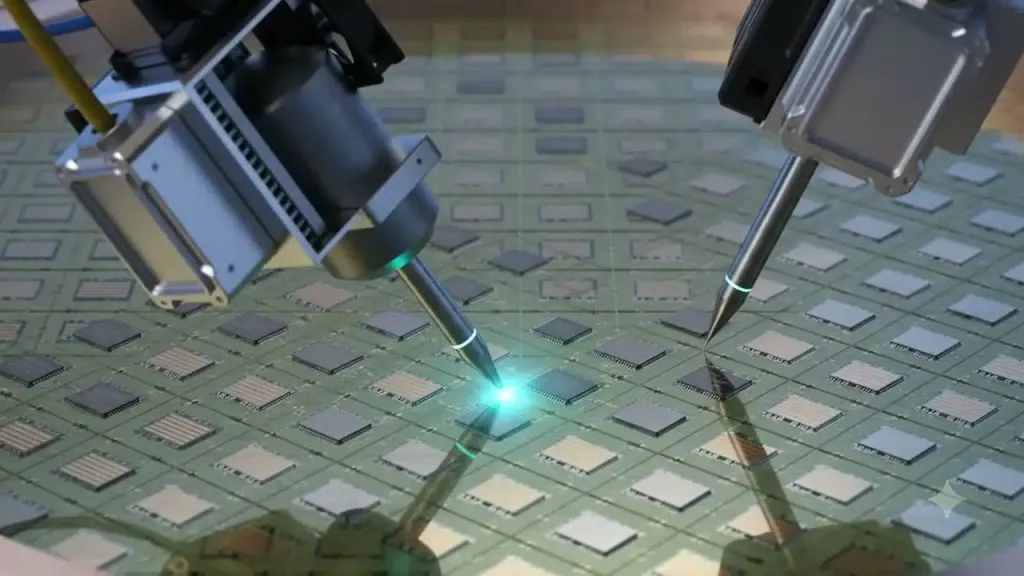
The article discusses the complex global supply chain of AI chips, emphasizing that it involves over thirty countries rather than just a US-China rivalry. It highlights Europe's significant role in this supply chain and the need for a strategic approach to leverage its capabilities in AI. The narrative surrounding the chip war oversimplifies the interdependencies that exist in the production of advanced processors.
- ▪AI chips require components and expertise from more than thirty countries.
- ▪The narrative of a US-China chip war obscures the structural interdependence of the global supply chain.
- ▪Europe holds several technical monopolies in the AI chip supply chain and could play a crucial role if it acts as a bloc.
Opening excerpt (first ~120 words) tap to expand
The invisible fabric of AI: chips are not a war between two, but a global fabric By Carlos Ortet · From 498A, a European AI lab · May 23, 2026 Illustration: Tara Jacoby. Every AI chip that trains a model at OpenAI, Anthropic or Mistral needs a set of mirrors polished in a German factory, a chemical resin mixed in a Japanese laboratory, and a packaging building in Taiwan whose waiting list runs past a year. Without any one of these three elements, the chip does not exist. None of them is American or Chinese. Almost nobody describes this international fabric: the supply chain of an advanced processor depends on the coordinated work of more than thirty countries. Not two.
…
Excerpt limited to ~120 words for fair-use compliance. The full article is at zoopa.es.
Discussion
0 commentsMore from zoopa.es