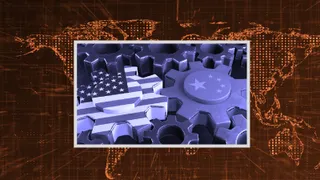
The agentic divide: Why “good enough” AI isn’t enough to survive the new economy

The article discusses the growing divide in access to high-quality AI agents, which is contributing to economic inequality. Well-resourced firms are able to leverage advanced AI tools to automate tasks and scale their operations, while smaller players struggle with inferior options. As AI agents become more prevalent, disparities in access and quality could lead to systemic dominance by those with better resources.
- ▪A widening gap in agent quality is creating a two-tier system in the economy.
- ▪Well-resourced firms can automate workflows at lower costs, gaining significant advantages.
- ▪Government initiatives in countries like India aim to democratize AI but face challenges such as surveillance risks.
Opening excerpt (first ~120 words) tap to expand
Innovation The agentic divide: Why “good enough” AI isn’t enough to survive the new economy A widening gap in agent quality is creating a two-tier system where well-resourced firms scale infinitely while small players are trapped by high-friction, “low-trust” tools. iStock/Rest of World iStock/Rest of World By Rina Chandran 26 May 2026 The gap between those who can access high-quality AI agents and those who cannot is becoming a major source of global and economic inequality.By automating complex workflows for a fraction of traditional labor costs, well-resourced firms and individuals can secure more benefits.Government-led initiatives in countries like India aim to democratize AI for the masses, but face risks of surveillance and sudden revocation of access.
…
Excerpt limited to ~120 words for fair-use compliance. The full article is at Rest of World.
Discussion
0 commentsMore from Rest of World