Technical Debt of AI Systems: Agent Runtime
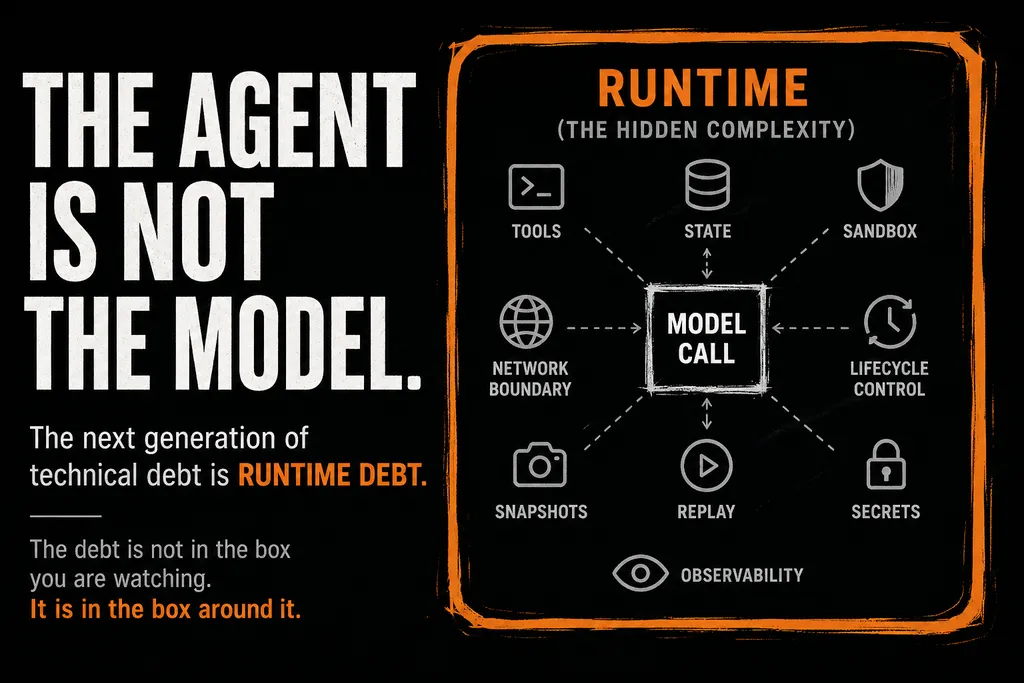
The article discusses how the infrastructure for running AI agents, known as agent runtime, is becoming a major source of technical debt in AI systems, similar to the broader operational challenges previously seen in MLOps. Unlike the core model, the agent runtime includes the environment, tools, isolation, and state management that enable agents to act, observe, and iterate, yet most teams are using ad-hoc or cloud-based solutions rather than building robust, secure runtimes. Proper sandboxing and isolation are critical to prevent security incidents, ensure reproducibility, and support safe multi-tenancy, especially as agents gain broader tool access and operate autonomously.
Opening excerpt (first ~120 words) tap to expand
Hidden Technical Debt of AI Systems: Agent Runtime Apr 24, 2026 • Han Lee | 18 min read (3306 words) Eleven years ago, Sculley et al. drew the diagram everyone in MLOps has seen: a tiny black box labeled “ML Code” surrounded by a sprawl of much larger boxes — data collection, feature extraction, configuration, monitoring, serving infrastructure. The point of the diagram was that the model code is the smallest piece of a real ML system, and that everything else is where the technical debt accumulates. The same diagram is being redrawn for agents. The agentic model call is the small box. The largest box to the right that is currently driving most of the spend and influencing how system architecture will be done in the futureincidents, is the agent runtime, or agent serving infrastructure.
…
Excerpt limited to ~120 words for fair-use compliance. The full article is at Han, Not Solo.
Discussion
0 commentsMore from Han, Not Solo