Supreme Court’s Louisiana redistricting ruling poised to wipe out House Democrats in the South
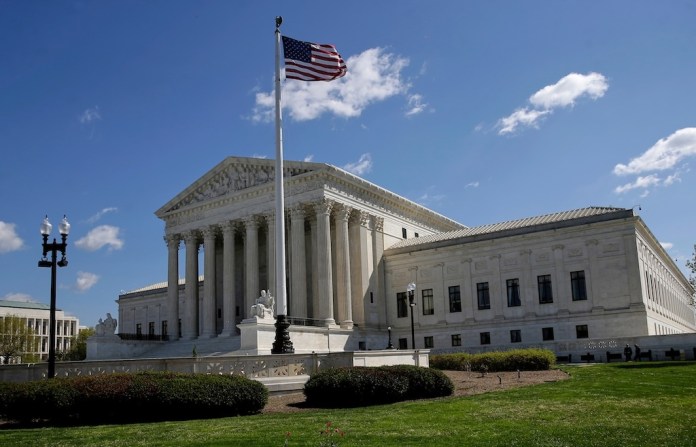
The Supreme Court's ruling in Louisiana v. Callais has redefined the legal standard for evaluating redistricting under Section 2 of the Voting Rights Act, making it harder to challenge maps that dilute minority voting power. The decision, which found Louisiana's creation of a second Black-majority district unconstitutional, shifts the focus from vote dilution to requiring proof of intentional racial discrimination. This change is expected to lead to the redrawing of congressional maps across the South, potentially eliminating several Democratic-held districts in the process.
Opening excerpt (first ~120 words) tap to expand
The Supreme Court’s landmark ruling Wednesday in Louisiana v. Callais is set to spark a shake-up of congressional maps across the South in the coming years, which will likely see multiple Democratic-held districts drawn out of existence. The high court ruled 6-3 on Wednesday that Louisiana’s creation of a second minority-majority district in compliance with Section 2 of the Voting Rights Act was an unconstitutional racial gerrymander. The majority also rewrote the legal test for determining unlawful redistricting under Section 2 of the VRA, as established by a 1986 ruling in Thornburg v. Gingles. Under the previous Gingles test, lawsuits over a state’s congressional maps simply had to show that the voting power of minorities was diluted, regardless of the reason.
…
Excerpt limited to ~120 words for fair-use compliance. The full article is at Washington Examiner.
Discussion
0 commentsMore from Washington Examiner