Student-built system unlocks fully autonomous electroporation for 96- and 384-well workflows
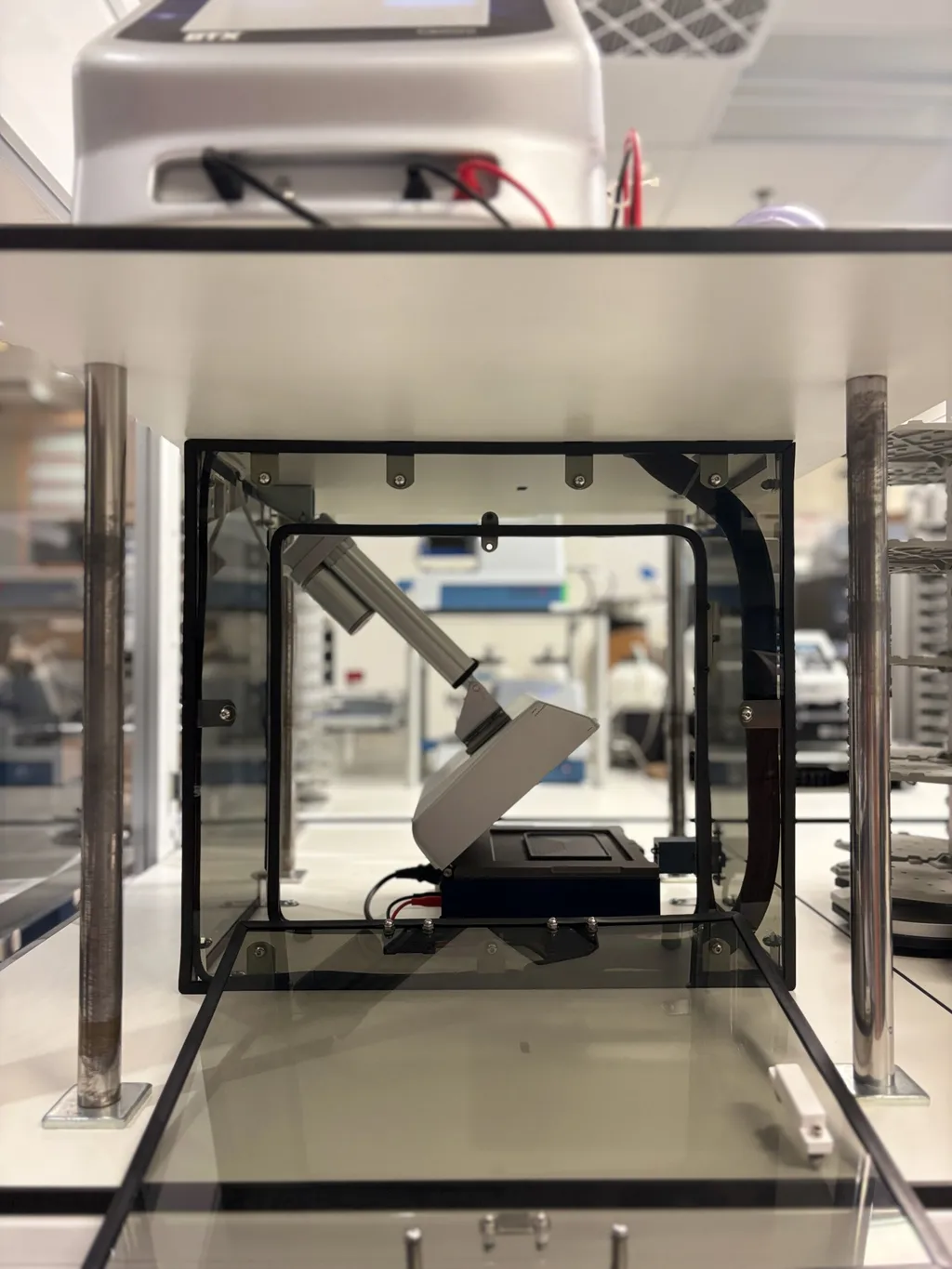
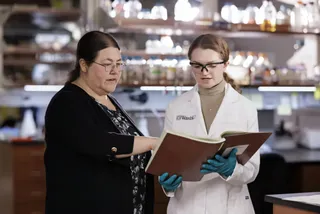
UCLA students Beatrice Mihalache and Benjamin Flom developed a fully automated electroporation system compatible with 96- and 384-well workflows at the Living Biofoundry. Their solution integrates software and mechanical components to enable autonomous operation of the BTX Gemini X2 Electroporation System without sacrificing manual accessibility. The innovation supports high-throughput synthetic biology research by removing manual bottlenecks in automated lab pipelines.
- ▪The BTX Gemini X2 Electroporation System previously required manual steps like pressing a lid-release button and placing plates, creating a bottleneck in automated workflows.
- ▪Mihalache created a custom software bridge to enable communication between the electroporator and the lab’s automation system, despite the absence of a public API.
- ▪Flom designed a mechanical enclosure with actuators that automate lid operation and plate handling while preserving the instrument’s manual functionality.
- ▪The system maintains twin wave functionality, supporting both exponential decay pulses for microbes and square waves for mammalian cells.
- ▪The automation allows the electroporator to function as a seamless part of end-to-end synthetic biology pipelines in high-throughput research environments.
Opening excerpt (first ~120 words) tap to expand
May 16, 2026 Student-built system unlocks fully autonomous electroporation for 96- and 384-well workflows by Nicole Wilkins, California NanoSystems Institute edited by Andrew Zinin Andrew Zinin Lead Editor Meet our editorial team Behind our editorial process Editors' notes This article has been reviewed according to Science X's editorial process and policies. Editors have highlighted the following attributes while ensuring the content's credibility: fact-checked trusted source proofread The GIST Add as preferred source The innovation of automating the electroporator will help accelerate research workflows for scientists in both academia and industry, while also expanding the potential for more autonomous biotech labs in the future.
…
Excerpt limited to ~120 words for fair-use compliance. The full article is at Phys.org.
Discussion
0 commentsMore from Phys.org