Soccer Meets Space Science
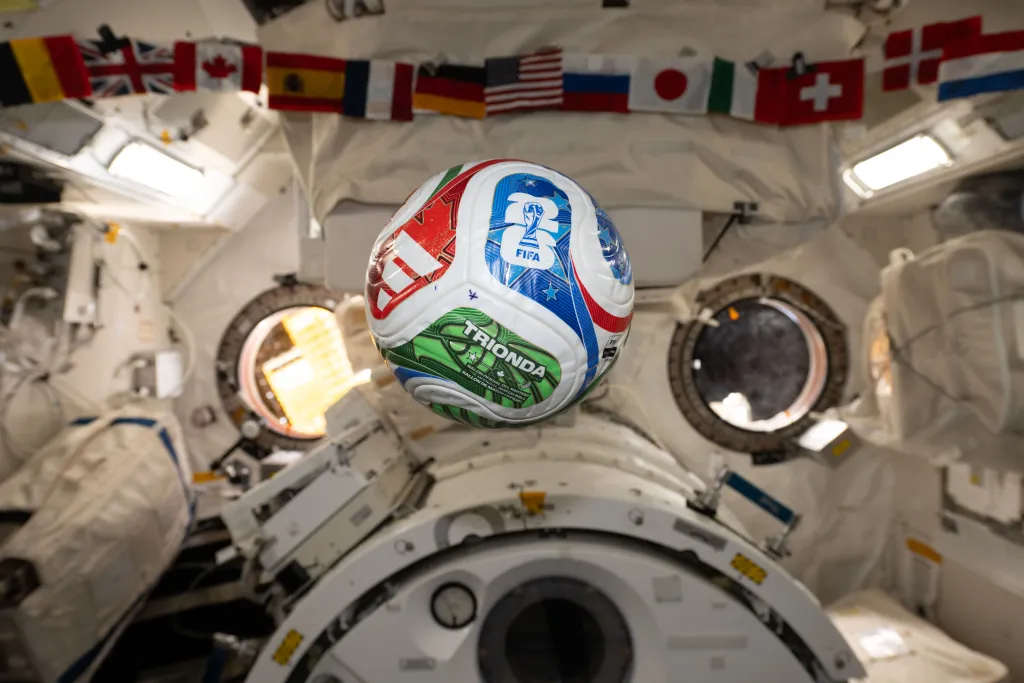
NASA conducted an experiment on the International Space Station to study how soccer balls behave in microgravity. The research aimed to understand how internal mass affects motion and stability in microgravity, which can improve the performance of soccer balls with embedded technologies. The findings can benefit athletes and fans of the sport, demonstrating how space research can have practical applications on Earth.
- ▪The International Space Station crew tested soccer balls in microgravity to study their motion and stability.
- ▪The research focused on how internal mass affects the behavior of soccer balls in microgravity.
- ▪The findings can improve the performance of soccer balls with embedded technologies, such as match-ball sensors.
Opening excerpt (first ~120 words) tap to expand
1 min readSoccer Meets Space ScienceHQ Web TeamJun 11, 2026 Image Article NASA A soccer ball floats in microgravity in this March 2, 2026, picture from the International Space Station. The space station crew tested soccer balls to study how internal mass affects motion and stability in microgravity. The findings have improved understanding of how embedded technologies, including match-ball sensors, can influence performance during play. Through research aboard the International Space Station and technology developed for exploration, NASA continues to demonstrate how discoveries made for space can benefit people on Earth—including athletes and fans participating in the world’s most popular sport. Image credit: NASA
Excerpt limited to ~120 words for fair-use compliance. The full article is at NASA.