Rocket Report: Falcon Heavy is back; Russia's Soyuz-5 finally debuts
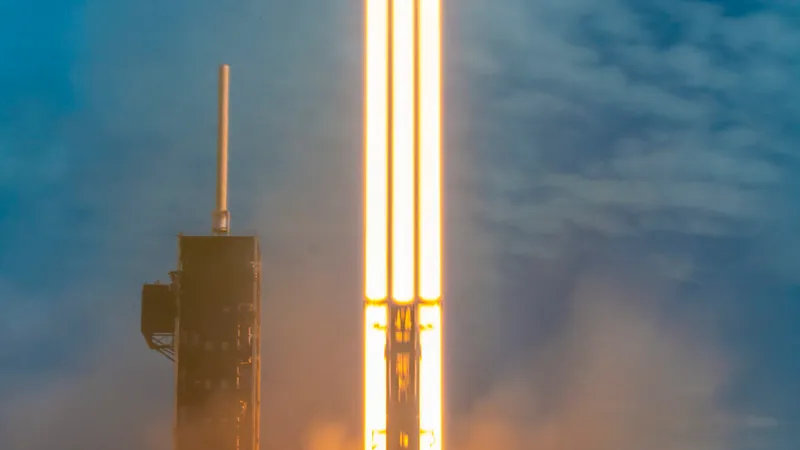
SpaceX's Falcon Heavy successfully returned to flight on April 29, 2026, launching from Kennedy Space Center as part of a busy week that saw 61 satellites deployed for Amazon's low Earth orbit broadband network. Russia also debuted its Soyuz-5 rocket, marking a significant milestone in its launch vehicle development program. Meanwhile, the US Space Force announced 12 companies, including SpaceX and Lockheed Martin, selected to develop Space-Based Interceptors for the Golden Dome missile defense initiative.
- ▪SpaceX launched Falcon Heavy on April 29, 2026, from Kennedy Space Center's Launch Complex 39A, deploying satellites for Amazon's Leo broadband network.
- ▪The US Space Force revealed 12 companies contracted to develop Space-Based Interceptor prototypes for the Golden Dome missile defense program, with agreements totaling up to $3.2 billion.
- ▪Virgin Galactic completed structural assembly of its first Delta-class SpaceShip and began ground testing in Mesa, Arizona, aiming for commercial flights by year-end.
- ▪Gen. Michael Guetlein indicated that space-based boost-phase missile interceptors may not proceed to production if they are not affordable and scalable.
- ▪Russia successfully debuted its Soyuz-5 rocket, marking a new development in its medium-lift launch vehicle capabilities.
Opening excerpt (first ~120 words) tap to expand
Roundup Rocket Report: Falcon Heavy is back; Russia’s Soyuz-5 finally debuts Two launches this week delivered 61 more satellites to orbit for the Amazon Leo broadband network. Stephen Clark – May 1, 2026 8:39 am | 5 This long exposure photo shows the triple exhaust plume from SpaceX's Falcon Heavy rocket as it streaked away from Launch Complex 39A at Kennedy Space Center, Florida, on April 29, 2026. Credit: SpaceX This long exposure photo shows the triple exhaust plume from SpaceX's Falcon Heavy rocket as it streaked away from Launch Complex 39A at Kennedy Space Center, Florida, on April 29, 2026.
…
Excerpt limited to ~120 words for fair-use compliance. The full article is at Ars Technica - All content.
Discussion
0 commentsMore from Ars Technica - All content