Robotic Mitral Valve Surgery Shows Durable Results
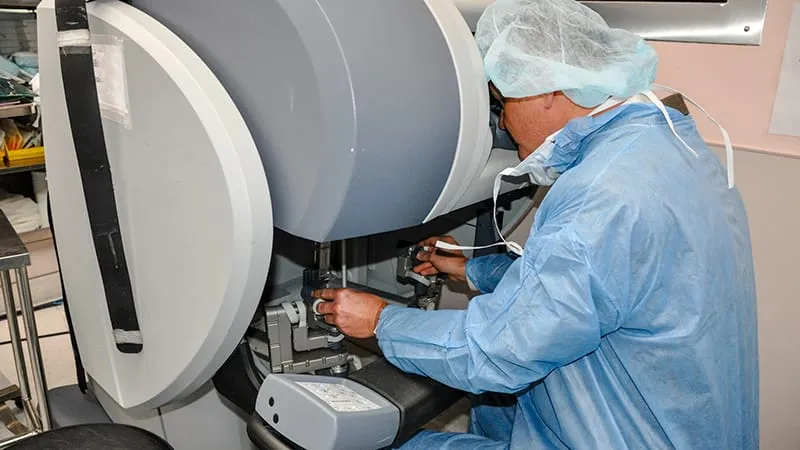
Robotic-assisted mitral valve surgery has demonstrated excellent long-term repair durability and reduced hospital stays compared to traditional methods. A study involving nearly 600 patients showed high repair rates and low failure rates, with only 2.5% requiring reoperation after 10 years. This minimally invasive approach is becoming a preferred option for treating degenerative mitral valve disease.
- ▪Robotic-assisted mitral valve surgery achieved near 100% repair rates for degenerative disease.
- ▪Only around 2.5% of patients required reoperation for repair failure at 10 years.
- ▪The median age of patients in the study was 62 years, with most procedures being elective.
Opening excerpt (first ~120 words) tap to expand
MANCHESTER — Robotic-assisted mitral valve surgery achieved excellent long-term repair durability while significantly reducing intensive care and hospital stays compared with conventional minimally invasive approaches, according to data from the largest UK series of robotic and endoscopic mitral valve procedures.Nearly 600 patients with degenerative mitral valve disease were treated over a 14-year period. “There were near 100% repair rates and low failure rates for degenerative disease in all pathologies, with minimally invasive and robotic surgery, even when traversing the learning curve,” reported lead investigator, Paul Modi, professor of cardiac surgery at Liverpool Heart and Chest Hospital.“The repairs are high quality and extremely durable,” he told Medscape News UK in an interview.
…
Excerpt limited to ~120 words for fair-use compliance. The full article is at Medscape.
Discussion
0 commentsMore from Medscape