Programmers Spend Their Time – Probably Dance
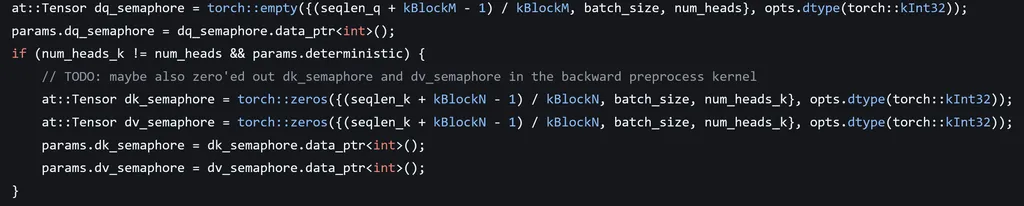
A programmer details the lengthy debugging process behind a seemingly simple code change, highlighting the hidden complexities in modern software development environments. Despite the fix requiring only seconds of typing, the process took over ten hours due to tooling issues, environment constraints, and subtle memory bugs. The investigation revealed a use-after-free bug in the flash-attention library, which required building a custom version to confirm.
- ▪The bug was initially hard to reproduce and suspected to be exposed by unrelated code changes.
- ▪Compute Sanitizer helped identify memory issues, but only after running tests outside the sandboxed testing framework.
- ▪A use-after-free bug was found in flash-attention's semaphore handling, where memory was accessed after being freed.
- ▪Building a custom flash-attention wheel was necessary to test the fix, but was delayed by CUDA version and build system issues.
- ▪The programmer avoided CUDA 13.0 due to potential compatibility risks and upgraded to CUDA 12.9 instead.
Opening excerpt (first ~120 words) tap to expand
I submitted a tiny patch to flash attention. The necessary typing for the change takes less ten seconds, but the overall change took more than ten hours So where does the time go? It started when coworker had a bug where cudnn attention would crash randomly. We looked at his unreleased changes and concluded that they couldn’t possibly cause this, so we suspected that we had a lingering bug that was exposed by making harmless changes to related code. Step 1, a few hours: My coworker tried to figure this out just by running the code repeatedly, trying out various theories. The bug was hard to reproduce so this took hours without much progress. Step 2, 1 hour: I thought this is a good reason to try out compute sanitizer.
…
Excerpt limited to ~120 words for fair-use compliance. The full article is at Probably Dance.
Discussion
0 commentsMore from Probably Dance