'Pioneering' study to boost bee numbers at Wakehurst
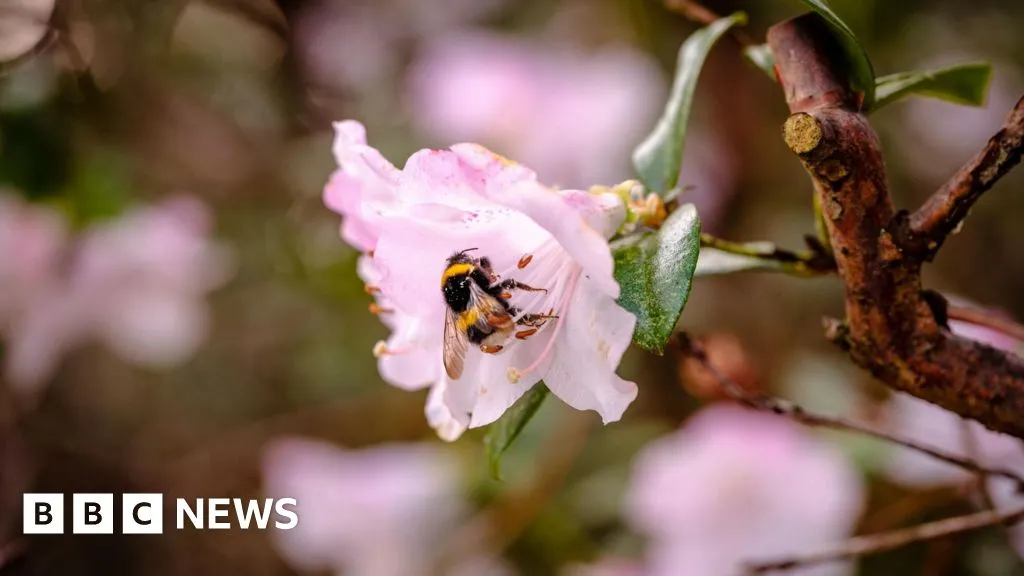
Wakehurst botanical gardens in West Sussex is celebrating five years of research aimed at boosting pollinator populations. The Nature Unlocked programme focuses on identifying effective plants for supporting various pollinators, including bees. Recent studies revealed a significant diversity of bee species in the area, highlighting the importance of trees in providing early-season pollen and nectar.
- ▪Wakehurst identified 110 species of bees in the area, surpassing the total number in all of Ireland.
- ▪The Nature Unlocked programme was launched in 2021 to address climate change and biodiversity loss.
- ▪Scientists are using bioacoustic monitors and AI to study pollinator behavior and populations.
Opening excerpt (first ~120 words) tap to expand
'Pioneering' study to boost bee numbers at Wakehurst28 April 2026ShareSaveAdd as preferred on GoogleFiona Irving,in WakehurstandHsin-Yi Lo,South EastJim HoldenScientists at Wakehurst identified 110 species of bees in the areaA botanic garden in West Sussex is celebrating five years of its "pioneering" research, which aims to boost pollinating insect populations.Kew's Wakehurst botanical gardens launched its Nature Unlocked programme in 2021 with an aim to develop solutions to climate change, nature recovery and biodiversity loss.One of its projects is to identify which plants are most effective for supporting pollinators including bees, wasps, butterflies and moths.Wakehurst said that bees were a "critical resource for ensuring food security and sustaining biodiversity".
…
Excerpt limited to ~120 words for fair-use compliance. The full article is at BBC News.
Discussion
0 commentsMore from BBC News