Panopticon
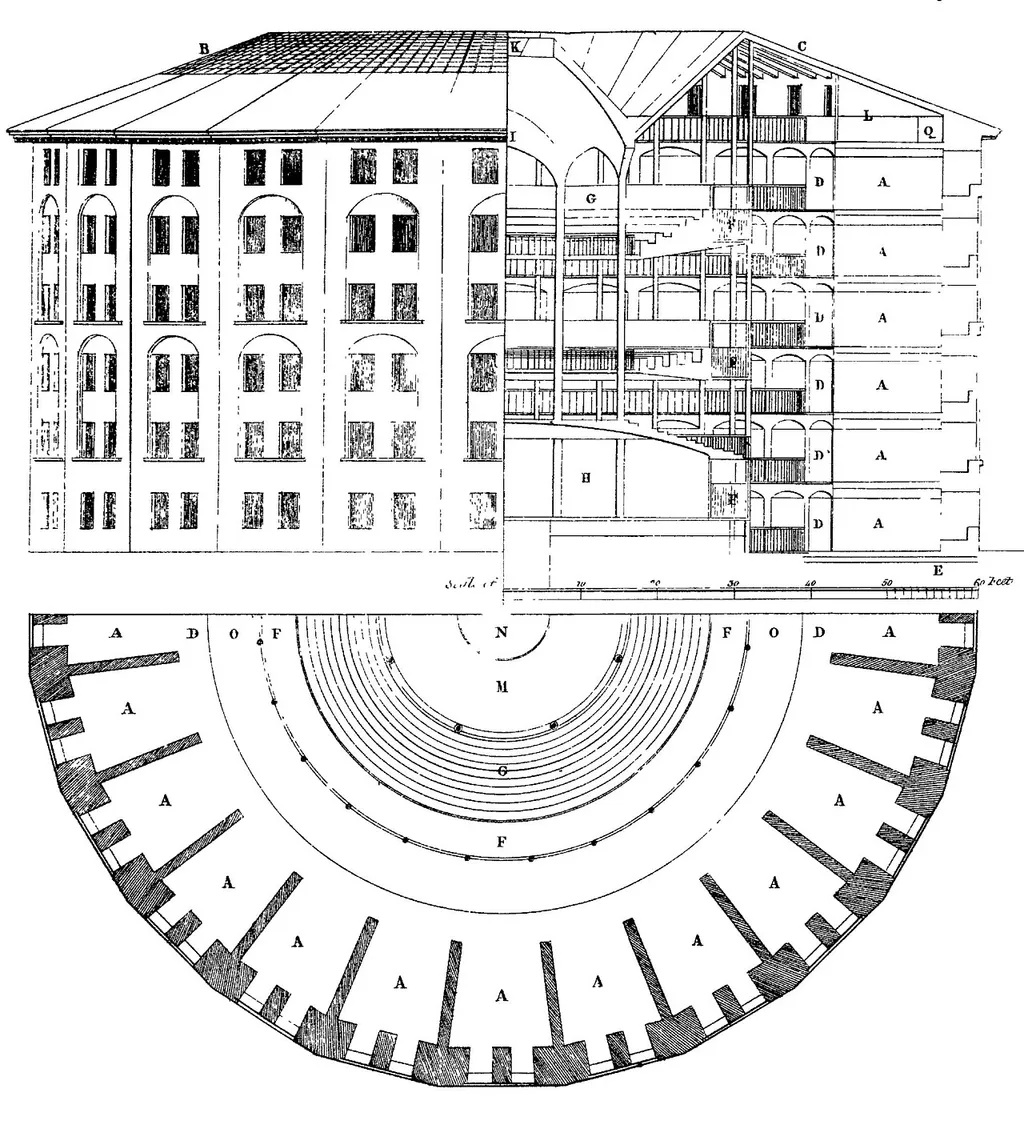
The panopticon is a prison design conceived by English philosopher Jeremy Bentham in the 18th century, intended to allow a single guard to observe all inmates without them knowing when they are being watched. This concept relies on the psychological effect of perceived constant surveillance to encourage self-regulation among prisoners. Although never fully realized in Bentham's time, the idea has influenced modern theories of surveillance and control in institutions.
- ▪The panopticon was designed by Jeremy Bentham and derived from the Greek word 'panoptes,' meaning 'all seeing.'
- ▪The architectural design features a central observation tower surrounded by inmate cells, enabling potential surveillance of all prisoners by one guard.
- ▪Bentham intended the panopticon principle to apply not only to prisons but also to hospitals, schools, and asylums.
- ▪The concept relies on the uncertainty of surveillance to induce self-discipline among inmates, even if they are not actually being watched.
- ▪Bentham also proposed that the prison manager should be subject to public oversight, addressing the question of accountability for those in power.
Opening excerpt (first ~120 words) tap to expand
Toggle the table of contents Panopticon 38 languages العربيةAzərbaycancaБеларускаяCatalàČeštinaDanskDeutschΕλληνικάEspañolEestiEuskaraفارسیSuomiFrançaisעבריתहिन्दीBahasa IndonesiaÍslenskaItaliano日本語Gĩkũyũ한국어LatviešuNederlandsNorsk nynorskNorsk bokmålOccitanPolskiPortuguêsRomânăРусскийSrpskohrvatski / српскохрватскиСрпски / srpskiSvenskaTürkçeУкраїнськаOʻzbekcha / ўзбекча中文 Edit links ArticleTalk English ReadEditView history Tools Tools move to sidebar hide Actions Read Edit View history General What links hereRelated changesUpload filePermanent linkPage informationCite this pageGet shortened URL Print/export Download as PDFPrintable version In other projects Wikimedia CommonsWikidata item Appearance move to sidebar hide From Wikipedia, the free encyclopedia Prison design .mw-parser-output…
Excerpt limited to ~120 words for fair-use compliance. The full article is at Wikipedia.