Pakistan's lost city of 40k people
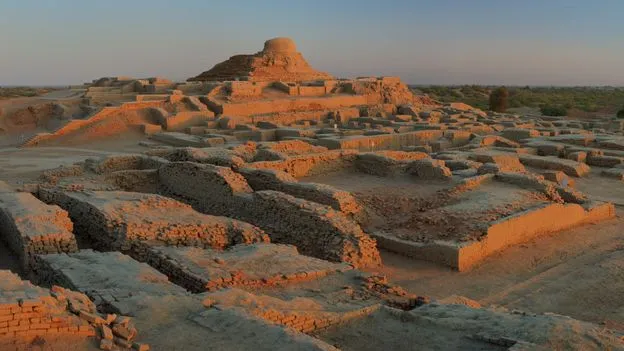
Mohenjo-daro, an ancient city in southern Pakistan, was once home to around 40,000 people and is considered one of the earliest urban centers in the world. This UNESCO World Heritage Site features advanced infrastructure, including a sophisticated sanitation system and extensive trade networks. Despite its historical significance, Mohenjo-daro remains largely unknown compared to other ancient civilizations like Egypt and Mesopotamia.
- ▪Mohenjo-daro was inhabited from 2500 to 1700 BCE and was part of the Indus Valley Civilization.
- ▪The city featured advanced urban planning, including a complex sanitation system with covered drains and private toilets.
- ▪Excavations began in 1922, leading to its recognition as a UNESCO World Heritage Site in 1980.
Opening excerpt (first ~120 words) tap to expand
Pakistan's lost city of 40,000 people15 November 2022ShareSaveAdd as preferred on GoogleSamantha SheaFeatures correspondentNadeem Khawar/Getty Images(Credit: Nadeem Khawar/Getty Images)In the dusty plains of present-day Sindh in southern Pakistan lie the remains of one of the world's most impressive ancient cities that most people have never heard of.A slight breeze cut through the balmy heat as I surveyed the ancient city around me. Millions of red bricks formed walkways and wells, with entire neighbourhoods sprawled out in a grid-like fashion. An ancient Buddhist stupa towered over the time-worn streets, with a large communal pool complete with a wide staircase below. Somehow, only a handful of other people were here – I practically had the place all to myself.
…
Excerpt limited to ~120 words for fair-use compliance. The full article is at Bbc.
Discussion
0 commentsMore from Bbc