
One in every $20 Super Micro earned 2024 to 2025 came from a front company
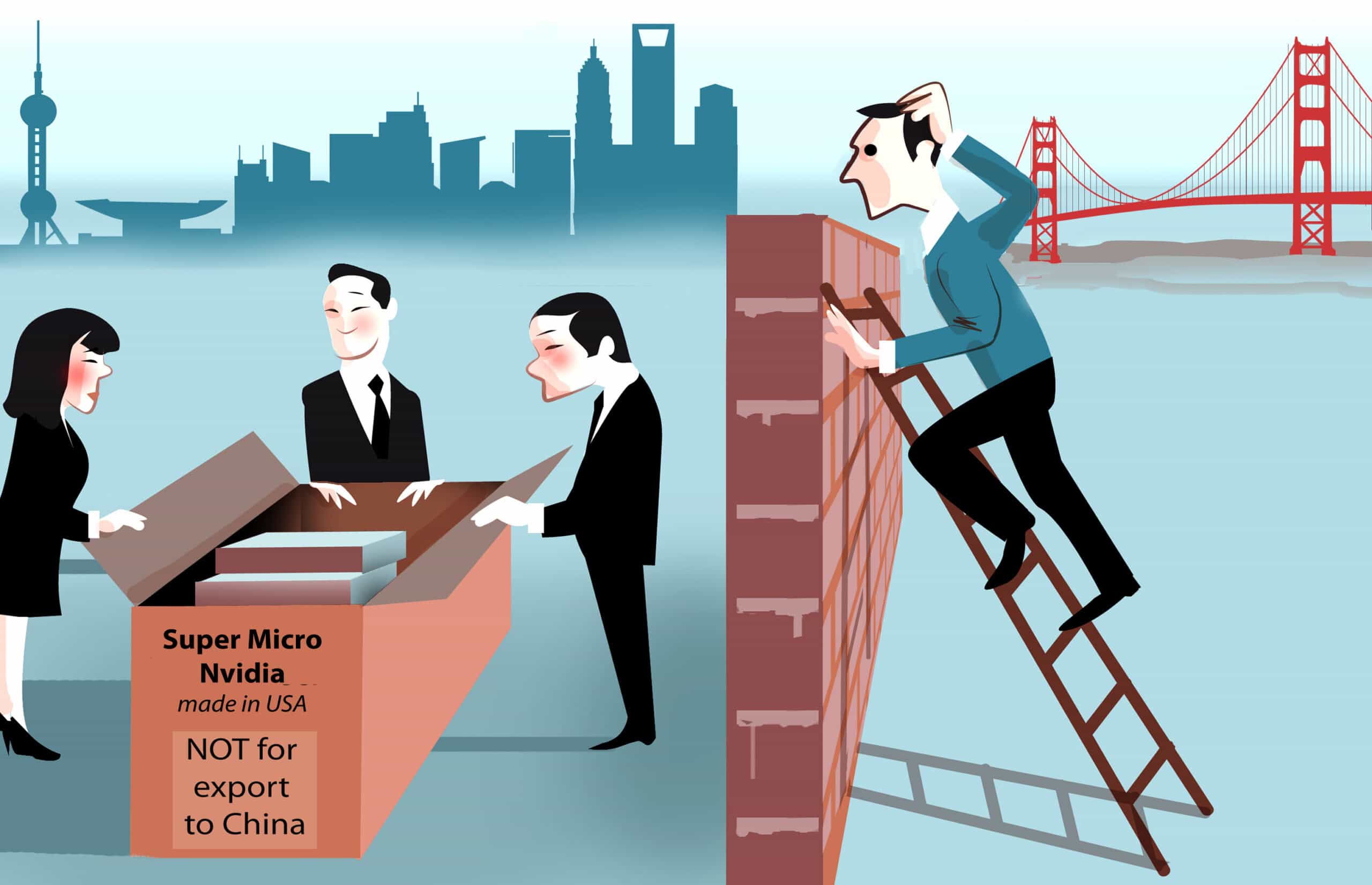
Super Micro Computer, a major server supplier for AI infrastructure, is facing scrutiny over alleged involvement in smuggling high-end Nvidia AI chips to China through front companies, despite not being formally charged. Two separate U.S. federal investigations revealed schemes where Super Micro servers were linked to illicit chip transactions, raising concerns about compliance and corporate governance. The company has a history of regulatory issues, including past sanctions violations and accounting scandals, which are now resurfacing amid its rapid growth during the AI boom. While Super Micro denies wrongdoing and claims cooperation with authorities, investors and analysts are questioning its oversight and long-term credibility.
- ▪One in every 20 dollars Super Micro earned from 2024 to 2025 came from a front company allegedly involved in smuggling AI chips to China.
- ▪Super Micro was not charged in either of the two federal chip smuggling cases, but court documents and investigations link its servers to the illicit transactions.
- ▪The company has a history of compliance failures, including a 2006 fine for selling to Iran and a 2020 SEC settlement over accounting violations.
- ▪Shareholders have sued Super Micro, alleging securities fraud over concealed sales to China, while governance watchdogs have downgraded its corporate governance rating.
- ▪Despite the controversies, Super Micro remains a key Nvidia partner and major supplier to AI firms like Meta, CoreWeave, and Elon Musk’s companies.
Full article excerpt tap to expand
By Eliot Chen — April 26, 2026 CompaniesSecurityTechnologyTrade .a2a_kit .a2a_svg { display: none; }.a2a_kit .fa-print::after { display: none; } Illustration by Luis Grañena In November 2024 Su Di, founder of Garage Cafe, a startup incubator based in Beijing’s Zhongguancun Science Park, had something to share with his followers on Douyin, China’s TikTok. “Here I have one of two hundred Nvidia H200 graphics cards — currently the most expensive chips on the market — that have just arrived,” he announced, gesturing at a board of Nvidia chips. /* Styling for videos aligned right */ figure.wp-block-video.nvidia-unboxing.alignright { float: right; width: 390px; margin: 0.5em -7.5em 0em 1.5em; } figure.wp-block-video.nvidia-unboxing.alignright video { width: 100%; display: block; } figure.wp-block-video.nvidia-unboxing.alignright figcaption { text-align: left; } /* Adjust margins for screens under 768px */ @media only screen and (max-width: 768px) { figure.wp-block-video.nvidia-unboxing.alignright { margin: 0; float: none; width: auto; } } In a video posted to Douyin, Su Di, founder of startup incubator Garage Cafe, shows his recent shipment of Nvidia H200 graphics cards. Credit: Byron Wan via X At the time, the U.S. government had imposed export controls on chips like the H200, prohibiting their sale to China. But this wasn’t the first time Su had posted a video boasting about getting his hands on the powerful processors, which are coveted by university labs, the world’s largest artificial intelligence (AI) companies and militaries, among others. “Some people responded to my last video by saying: that’s illegal,” he crowed. “Indeed, what we did was illegal — illegal under America’s laws. My buddy who works with these cards has been doing it for two years, always dealing with massive quantities. He’s been blacklisted by the U.S. twice. But I see him as contributing to China’s AI capabilities.” Su had more to share. The next scene showed workers unboxing crates of Nvidia’s chips. Clearly emblazoned on the cardboard box was a logo revealing who had sold the chips to Su’s “buddy”: Super Micro Computer. On March 19, San Jose-based Super Micro made headlines after its co-founder, Taiwanese American Wally Yih-Shyan Liaw, was arrested and charged with helping to smuggle billions of dollars of AI chips to China. An excerpt from the indictment of Wally Yih-Shyan Liaw, Ruei-Tsang Chang, and Ting-Wei Sun. Federal prosecutors in New York alleged that Liaw, who served as senior vice president of business development at Super Micro, and two co-defendants, sales manager Ruei-Tsang Chang and contractor Ting-Wei Sun, oversaw a scheme that involved using a hair dryer to remove labels and serial numbers from real AI servers and placing them on dummy replacements in order to dupe Super Micro’s compliance team. The operation, which began in 2024 and continued until December 2025, eventually became so large, prosecutors say, that the front company used for the purchases was at one point Super Micro’s eleventh most profitable customer worldwide. Super Micro itself was not charged and there is no indication that the chips Su had acquired came from the Liaw’s alleged operation. But another indictment, unsealed days after Liaw and his co-conspirators were charged, revealed another alleged chip smuggling conspiracy that appeared to involve Super Micro’s servers. Texts obtained through the investigation into the alleged chip smuggling conspiracy being investigated in…
This excerpt is published under fair use for community discussion. Read the full article at The Wire China.