Newly discovered, blue-whale-size asteroid will fly super close to Earth Monday — and you can watch it live
A newly discovered asteroid named 2026 JH2, estimated to be up to 115 feet wide, will pass close to Earth on Monday, May 18, at a distance of about 56,000 miles. Traveling at approximately 20,000 mph, the asteroid poses no impact risk and will come closer than some satellites but will not threaten spacecraft. The flyby can be viewed via telescope, binoculars, or a live stream from the Virtual Telescope Project in Italy.
- ▪Asteroid 2026 JH2 was discovered on May 10 by astronomers at the Mount Lemmon Observatory in Arizona.
- ▪The asteroid is up to 115 feet (35 meters) in diameter, comparable in size to a blue whale and similar to the Chelyabinsk meteor.
- ▪It will pass Earth at about 56,000 miles (91,000 kilometers) — closer than some satellites but with zero risk of impact.
- ▪The flyby will be visible through telescopes or binoculars and streamed live by the Virtual Telescope Project.
- ▪2026 JH2 orbits the sun every 3.7 years on an elliptical path extending near Jupiter.
Opening excerpt (first ~120 words) tap to expand
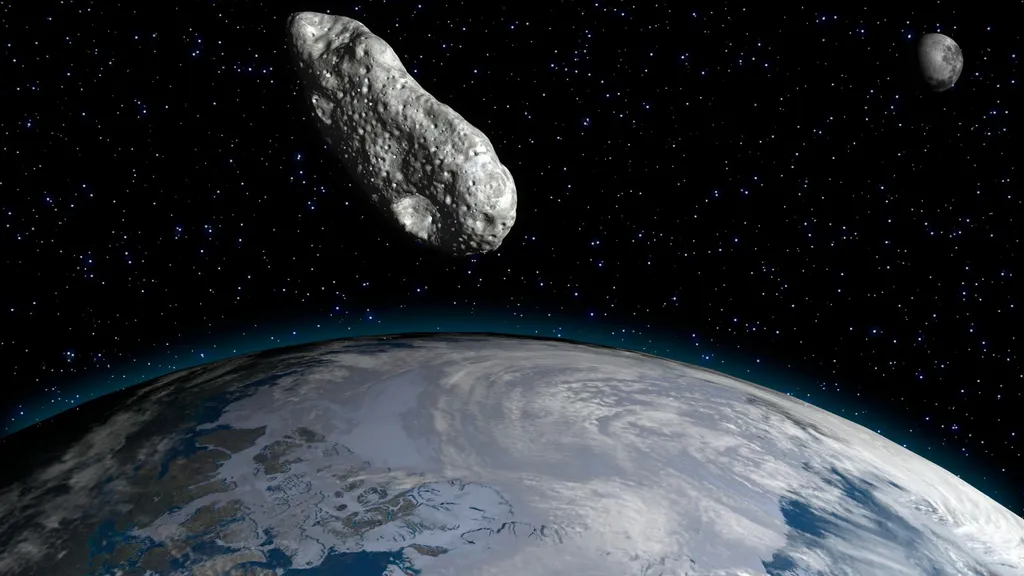
Space Astronomy Asteroids Newly discovered, blue-whale-size asteroid will fly super close to Earth Monday — and you can watch it live Newly spotted asteroid 2026 JH2, which could be up to 115 feet wide, will fly past Earth closer than some satellites on Monday (May 18). The close approach will be visible to stargazers and can be viewed via livestream. By Harry Baker published 16 May 2026 in News When you purchase through links on our site, we may earn an affiliate commission. Here’s how it works. An illustration of a near-Earth asteroid. Asteroid 2026 JH2 will reach a minimum distance of around 56,000 miles (91,000 kilometers) from Earth's surface on Monday (May 18).
…
Excerpt limited to ~120 words for fair-use compliance. The full article is at Live Science.
Discussion
0 commentsMore from Live Science