Nedra Talley Ross, last surviving member of the Ronettes, dies aged 80
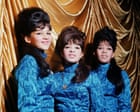
Nedra Talley Ross, the last surviving member of the 1960s girl group the Ronettes, has died at the age of 80. She performed alongside her cousins Ronnie Spector and Estelle Bennett, achieving fame with hits like 'Be My Baby' and helping define the era's pop sound. The group was inducted into the Rock and Roll Hall of Fame in 2007, and Talley Ross later pursued a career in real estate and Christian music. She died at home, surrounded by family, according to her daughter.
Full article excerpt tap to expand
The Ronettes in 1964: (L-R) Nedra Talley Ross, Ronnie Spector and Estelle Bennett. Ross, who was the final surviving member, has died aged 80. Photograph: Pictorial Press Ltd/AlamyView image in fullscreenThe Ronettes in 1964: (L-R) Nedra Talley Ross, Ronnie Spector and Estelle Bennett. Ross, who was the final surviving member, has died aged 80. Photograph: Pictorial Press Ltd/AlamyMusicNedra Talley Ross, last surviving member of the Ronettes, dies aged 80Singer performed hits including Be My Baby with her cousins Ronnie Spector and Estelle BennettSian Cain and Ben Beaumont-ThomasSun 26 Apr 2026 23.06 EDTLast modified on Mon 27 Apr 2026 01.59 EDTSharePrefer the Guardian on GoogleNedra Talley Ross, the last surviving member of the 1960s pop band the Ronettes, has died aged 80.Talley Ross, who was one part of the band with her cousins Ronnie Spector and Estelle Bennett, died at home on Sunday morning, her daughter Nedra K Ross announced on social media.“At approximately 8:30 this morning our mother Nedra Talley Ross went home to be with the Lord,” she wrote. “She was safe in her own bed at home with her family close, knowing she was loved. Thank you Lord.”How we made the Ronettes’ Be My BabyRead moreBorn in Manhattan in 1946, Talley Ross first began performing with her cousins Ronnie (born Veronica Bennett) and Estelle when they were teenagers. Ronnie formed the Ronettes in 1957. They earned a residency at a local club and a record deal, but early singles failed to chart.Their careers took off in 1963 after Estelle cold-called the office of producer Phil Spector, who recently had a run of huge hits. According to Ronnie Spector’s memoir, when the trio launched into a version of Frankie Lymon’s Why Do Fools Fall In Love, Phil Spector jumped from his piano and exclaimed, “That’s the voice I’ve been looking for!”Though the Ronettes released just one studio album, they were both popular and enduring. Sporting an iconic look including beehive hairdos, they had their first big hit with Be My Baby (which also reached the UK top five), followed by others that didn’t quite match its commercial success but still reached the US Top 40 and deepened their legend, including Walking in the Rain, Baby, I Love You, and Do I Love You? “Our songs sang to boys, where other girl groups sang about boys,” Talley later said when asked about the group’s appeal.View image in fullscreenThe Ronettes perform in 1963. Photograph: Gilles Petard/RedfernsBe My Baby was famously used in many films including Mean Streets and Dirty Dancing; the songwriters’ agency BMI once calculated that Be My Baby had been played in 3.9m feature presentations on radio and television since 1963, or “the equivalent of 17 years back to back”.The Ronettes had three songs included, alongside other Spector-produced acts, on the 1963 festive compilation A Christmas Gift for You, including their rendition of Sleigh Ride, which was a US No 8 hit.The Rolling Stones were their support act on a 1964 UK tour – Talley briefly dated Brian Jones. “They could sing all their way right through a wall of sound,” Rolling Stones guitarist Keith Richards later said . “They didn’t need anything. They touched my heart right there and then and they touch it still.”The Ronettes also supported the Beatles on the band’s final US tour in 1966. Talley took lead vocals alongside Bennett for the latter, after the increasingly controlling Phil Spector forbade Ronnie, by then his partner, to go on the tour.The Ronettes…
This excerpt is published under fair use for community discussion. Read the full article at the Guardian.
Discussion
0 commentsMore from the Guardian