NASA’s Fermi Glimpses Power Source of Supercharged Supernovae
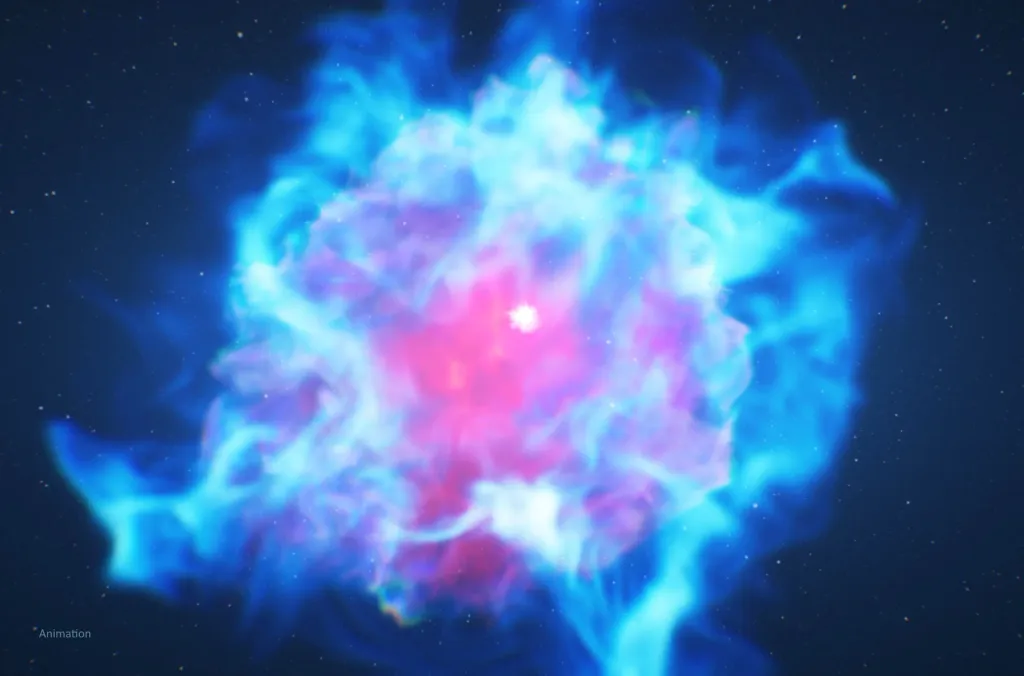
NASA's Fermi Gamma-ray Space Telescope has detected a rare supernova, SN 2017egm, which is unusually luminous. Researchers believe this supernova gained its brightness from a supermagnetized neutron star formed during the stellar collapse. This discovery opens new avenues for understanding the mechanisms behind superluminous supernovae.
- ▪The supernova SN 2017egm is located in galaxy NGC 3191, approximately 440 million light-years away.
- ▪Fermi's Large Area Telescope detected gamma rays from SN 2017egm, confirming its extraordinary luminosity.
- ▪This finding suggests that some supernovae can emit gamma rays as brightly as they do visible light.
Opening excerpt (first ~120 words) tap to expand
5 min readNASA’s Fermi Glimpses Power Source of Supercharged SupernovaeFrancis ReddyMay 20, 2026 Article An international team studying data from NASA’s Fermi Gamma-ray Space Telescope concludes the mission detected a rare, unusually luminous supernova. The researchers say it likely received its power-up from a supermagnetized neutron star born in the stellar collapse that triggered the explosion. Gamma rays detected by NASA’s Fermi Gamma-ray Space Telescope gave scientists a look under the hood of a rare supernova that produced much more light than normal.NASA’s Goddard Space Flight Center Download high-resolution video and images from NASA's Scientific Visualization Studio The Fermi mission is part of NASA’s fleet of observatories monitoring the changing cosmos to help humanity better…
Excerpt limited to ~120 words for fair-use compliance. The full article is at NASA.