NASA and ESA Track Record-Breaking 19-Day Solar Radio Burst
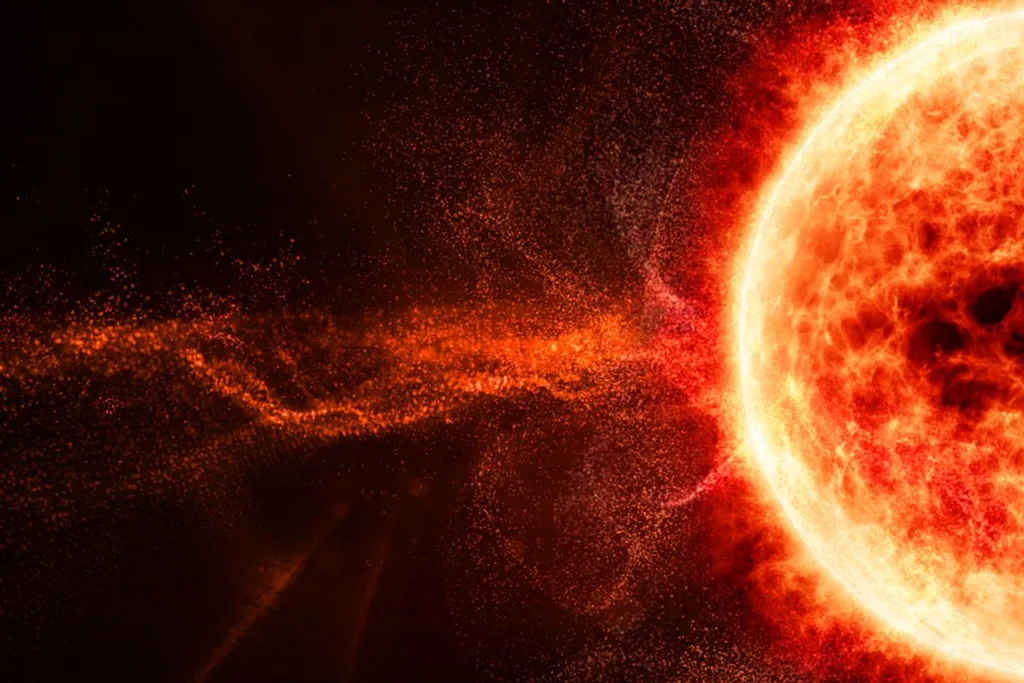
NASA and ESA have tracked a record-breaking solar radio burst that lasted 19 days, the longest of its kind ever recorded. This unusual event was monitored by multiple spacecraft as the sun rotated, allowing them to detect the signal repeatedly. Researchers believe a magnetic structure near the sun may have contributed to the burst's extended duration.
- ▪The 19-day solar radio burst is the longest Type IV burst ever recorded, surpassing the previous record of five days.
- ▪The event was tracked by NASA missions including Parker Solar Probe, Wind, and STEREO, along with the ESA-NASA Solar Orbiter mission.
- ▪Researchers suggest that a helmet streamer may have helped sustain the radio burst by trapping fast-moving particles.
- ▪During the event, three coronal mass ejections occurred, potentially supplying fresh particles to the magnetic structure.
- ▪The study of this event may enhance understanding of solar activity and the behavior of magnetic structures in the sun.
Opening excerpt (first ~120 words) tap to expand
For nearly three weeks, a strange radio signal appeared to circle the sun. One spacecraft would watch the signal fade from view, only for another elsewhere in the Solar System to detect it days later as the sun rotated. Instead of disappearing like most solar radio bursts, the signal kept returning. By the time it finally faded in September 2025, the burst had lasted 19 days, making it the longest Type IV solar radio burst ever recorded. The previous record lasted only about five days.The event was tracked by several NASA missions, including Parker Solar Probe, Wind, and STEREO, as well as the joint ESA-NASA Solar Orbiter mission.
…
Excerpt limited to ~120 words for fair-use compliance. The full article is at Discover Magazine.
Discussion
0 commentsMore from Discover Magazine