'My husband finally got full-time care – he died a week later'
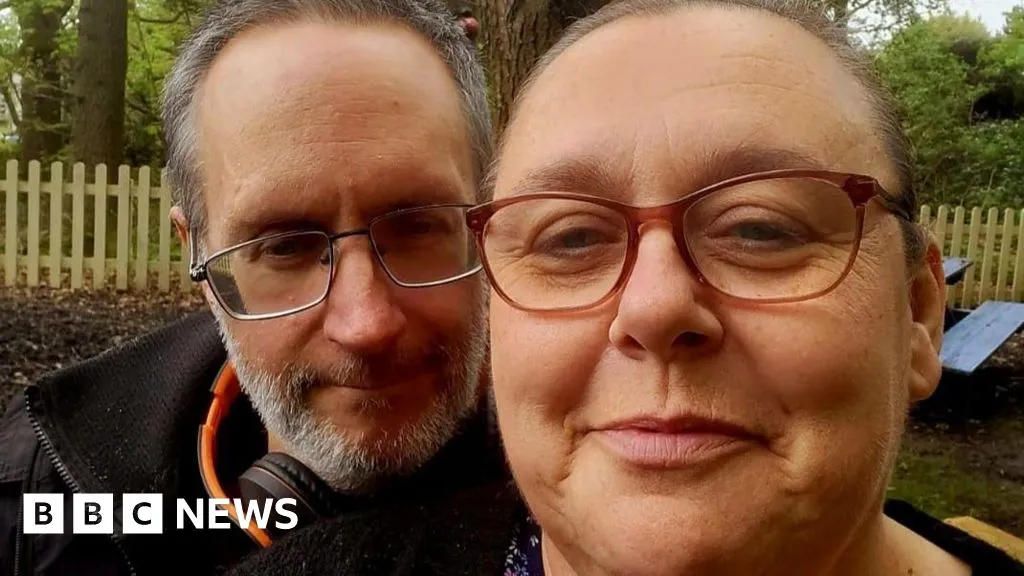
Kirsty Parsons shares details of her battle to secure adult social care support for her husband.
Full article excerpt tap to expand
'My husband finally got full-time care – he died a week later'5 hours agoShareSaveAdd as preferred on GoogleAlix Hattenstone,BBC EnglandandJonathan Fagg,BBC England Data UnitHandoutKirsty says she did everything with her "toy boy" JimKirsty Parsons first realised something was not right when she spotted how her husband Jim was walking across an airport car park. "It was a horrendous day, windy, horrible. He was just taking his time, hands in pockets, like it was gloriously sunny. No arm swing. The Parkinson's walk."Jim was 44 when he was diagnosed with Parkinson's disease, a progressive brain condition for which there is currently no cure. Kirsty, then 46, became an unpaid carer for the next 11 years.For Kirsty, it was an ongoing fight to get the additional support needed as his health worsened. Jim died in December 2025, a week after he got full-time care.Adult social care accounted for about 40% of net service spend by the English councils responsible for it in 2024-25, according to BBC analysis of government figures.However, the Association of Directors of Adult Social Services (ADASS) estimates 372,000 adults in England were still waiting to access social care on 31 March 2025. That is down from an estimated post-Covid peak of 542,002 on 30 April 2022.Jess McGregor, president of ADASS, warned that while this drop indicated progress, "we should be cautious about whether that means everyone is getting the care they need". She added she was worried for those not captured in the data, noting there were "people who don't recognise that the help they need is called social care, or who don't want to ask for help for a variety of reasons or who are not being helped by councils because our thresholds for who we help have got higher".In England, providing adult social care is the responsibility of unitary authorities, metropolitan district councils, county councils and London borough councils. Kirsty's council, Trafford in Greater Manchester, had a 45% net service spend on adult social care in 2024-25, which was higher than the England-wide figure of 41%. Only 24 other councils spent a higher proportion on adult social care. The BBC's analysis does not include spending on education, as its funding is ring-fenced.For Kirsty, now 56, accessing adult social care was not easy. On day one of Jim's diagnosis, she says he told her: "I want you to tell our story."After being diagnosed with Parkinson's, Jim developed other conditions. He and Kirsty could still find things to laugh about - Jim thought he could do carpentry, but mostly just "did a great line in sawdust". Their life together was changing though and Kirsty gave up her paid job as a carer to look after him. "We went from two full-time incomes to nothing. I couldn't leave him," she says. 'I became his parent'As Jim's health worsened, Kirsty would be up all day and night looking after him. Often he was unable to walk, screaming in pain, at times he could not breathe properly.He was on medication 24 hours a day, had hallucinations and set things on fire. His violent outbursts left him horrified. Kirsty stopped him from climbing out of a window. "I had to become the parent to him and not the partner," she says.Kirsty applied for social care support several times through Trafford Council as Jim's health worsened. Each time, she estimates she waited five to six months to receive increased support. Initially, Jim was given 12 hours with a paid carer, then 16 hours and later more time.In December…
This excerpt is published under fair use for community discussion. Read the full article at BBC News.